Estimated reading time: 5 minutes
For decades, weight loss research focused on one question: How can people reduce body fat while preserving muscle and improving long-term health? While healthy nutrition, physical activity, and behavior change remain the foundation of successful weight management, peptide-based medications have introduced a new approach by targeting the biological systems that regulate hunger, satiety, and blood sugar.
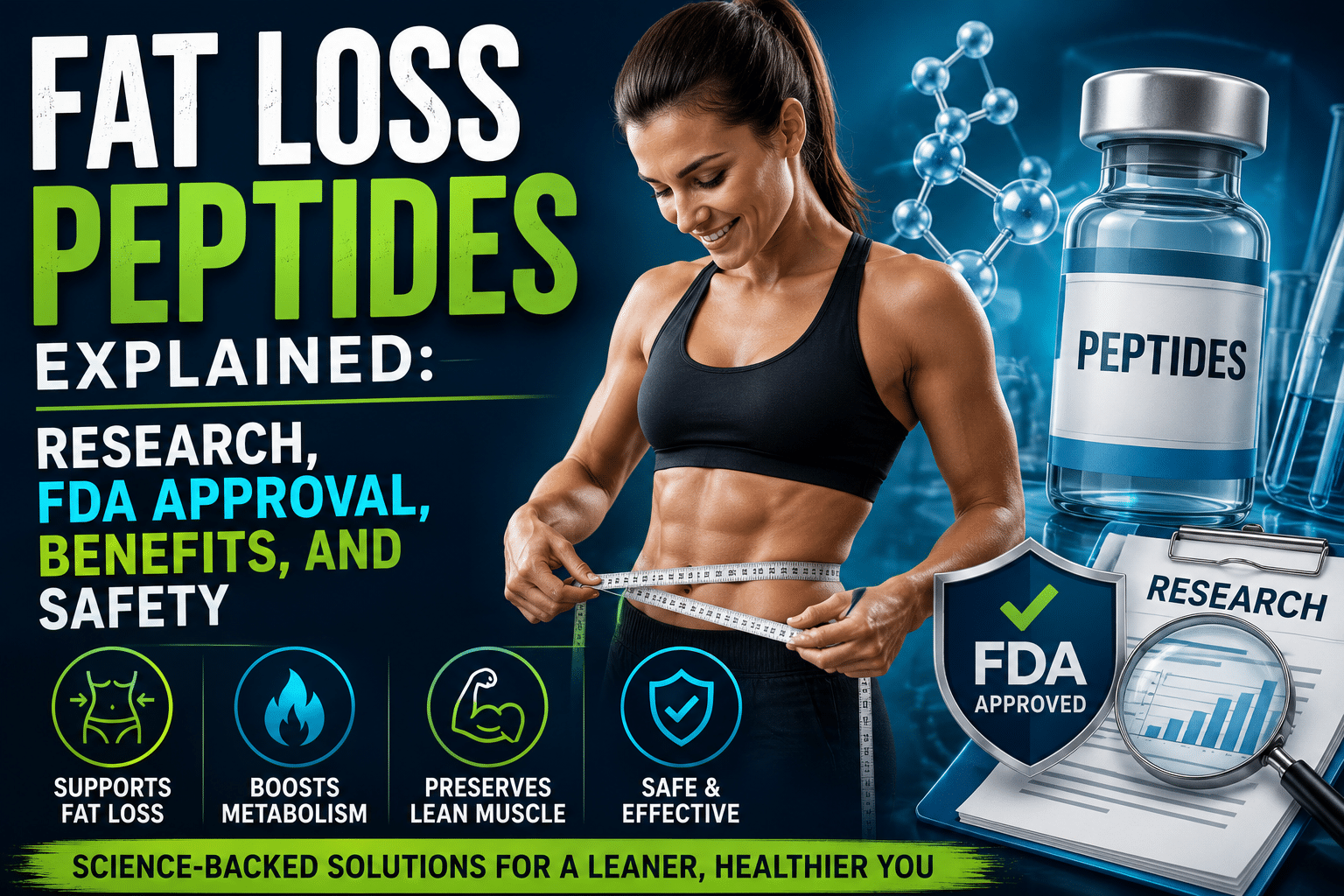
Some fat loss peptides are now FDA-approved treatments for obesity and type 2 diabetes, while others remain investigational. Understanding the science behind these medications helps separate proven therapies from early-stage research and unrealistic marketing claims.
What Are Fat Loss Peptides?
Fat loss peptides are peptide-based medications or investigational compounds designed to influence hormones involved in appetite regulation, energy balance, and metabolism.
Unlike stimulant-based weight-loss products, most peptide therapies work by mimicking hormones your body naturally produces after eating.
These hormones help regulate:
- hunger
- fullness (satiety)
- insulin secretion
- blood glucose
- stomach emptying
- food intake
Rather than forcing the body to burn more calories, many fat loss peptides reduce calorie intake by helping people feel satisfied with less food.
How Does the Body Naturally Control Hunger?
Several naturally occurring peptide hormones work together to regulate appetite.
GLP-1 (Glucagon-Like Peptide-1)
Produced in the intestines after meals, GLP-1:
- stimulates insulin release
- slows stomach emptying
- reduces appetite
- improves blood sugar regulation
This hormone became the foundation for several modern obesity medications.
GIP (Glucose-Dependent Insulinotropic Polypeptide)
GIP helps regulate insulin secretion after meals and works alongside GLP-1 in glucose metabolism.
Researchers discovered that activating both GLP-1 and GIP receptors may produce greater weight loss than targeting GLP-1 alone.
Amylin
Amylin is released with insulin by the pancreas.
It:
- slows digestion
- increases fullness
- reduces appetite
Scientists continue studying amylin-based therapies for obesity.
Ghrelin
Known as the “hunger hormone,” ghrelin rises before meals and stimulates appetite.
Future peptide research may target ghrelin pathways to help regulate hunger.
Which Fat Loss Peptides Are FDA Approved?
Semaglutide
Semaglutide is a GLP-1 receptor agonist.
It is approved under different brand names for type 2 diabetes and, in specific formulations and patient populations, for chronic weight management.
Benefits Observed in Clinical Trials
Large randomized trials have demonstrated:
- significant body-weight reduction
- improved blood sugar control
- reduced cardiovascular risk in selected patients
- improved satiety
Semaglutide is currently one of the most studied obesity medications in the world.
Tirzepatide
Tirzepatide activates both:
- GLP-1 receptors
- GIP receptors
Because it targets two hormone systems, it is often called a dual agonist.
Clinical trials have demonstrated greater average weight loss than many previous obesity medications in selected patient populations.
What About Retatrutide?
Retatrutide is one of the most promising investigational peptide therapies.
Unlike semaglutide and tirzepatide, it activates three different receptors:
- GLP-1
- GIP
- glucagon
Researchers hope this triple-agonist approach may further improve weight loss and metabolic health.
FDA Status
Retatrutide remains investigational and has not received FDA approval.
Large clinical trials are ongoing to evaluate its safety and effectiveness.
What Is AOD-9604?
AOD-9604 is a modified fragment of human growth hormone originally developed to investigate fat metabolism without many of the growth-promoting effects associated with HGH.
Early studies suggested possible effects on fat breakdown, but larger clinical trials have not demonstrated sufficient effectiveness for routine medical use.
FDA Status
AOD-9604 is not FDA approved for weight loss.
💪 FaithnFit Recommended Gear
Support healthy weight management with sustainable habits and quality fitness tools.
Peptide therapies may support weight management, but balanced nutrition, regular exercise, and healthy habits remain the foundation of long-term success.
How Much Weight Can People Lose?
Clinical trials have reported meaningful average weight reductions with some FDA-approved peptide medications when combined with:
- reduced-calorie diets
- increased physical activity
- long-term behavioral changes
Individual responses vary considerably based on:
- adherence
- genetics
- lifestyle
- medical conditions
- medication dose
These therapies are designed to support—not replace—healthy habits.
What Are the Potential Benefits?
Researchers have observed improvements in some patients, including:
- reduced appetite
- increased satiety
- improved blood sugar control
- reduced visceral fat
- lower cardiovascular risk in selected populations
- improved quality of life
The benefits depend on the specific medication and the medical condition being treated.
What Are the Possible Side Effects?
Common side effects reported during clinical trials include:
- nausea
- vomiting
- diarrhea
- constipation
- abdominal discomfort
- decreased appetite
Less common but potentially serious risks may include gallbladder disease, pancreatitis, and other complications. These medications should only be used under the supervision of a qualified healthcare professional.
Are Fat Loss Peptides Better Than Diet and Exercise?
No.
Fat loss peptides are tools, not replacements.
Nutrition remains the primary driver of long-term body composition.
Exercise supports:
- muscle preservation
- cardiovascular health
- metabolic flexibility
- bone density
- mental health
Patients who combine medication with healthy lifestyle changes generally achieve better long-term outcomes than those relying on medication alone.
Frequently Asked Questions
Are fat loss peptides safe?
FDA-approved medications have undergone extensive clinical testing for specific medical conditions. Investigational peptides continue to be studied, and their long-term safety is not yet fully established.
Are fat loss peptides steroids?
No. They are peptide-based medications that influence hormone signaling involved in appetite and metabolism.
Will fat loss peptides build muscle?
Their primary purpose is weight management. Maintaining adequate protein intake and participating in resistance training remain essential for preserving or increasing muscle mass during weight loss.
Can healthy people use these medications for cosmetic weight loss?
Prescription peptide therapies are approved for specific medical indications and should be used only under the guidance of a qualified healthcare professional.
Key Takeaways
Fat loss peptides represent one of the most significant advances in obesity medicine in recent decades. FDA-approved therapies such as semaglutide and tirzepatide have demonstrated meaningful weight reduction and metabolic benefits in appropriate patient populations, while newer investigational compounds like retatrutide continue to expand the possibilities for future treatment.
Despite these advances, peptide therapies are most effective when combined with sustainable lifestyle habits. Balanced nutrition, regular physical activity, adequate protein intake, quality sleep, and long-term behavior change remain the cornerstone of successful weight management.
As research evolves, fat loss peptides may continue to improve the treatment of obesity and related metabolic diseases, but informed decisions should always be based on high-quality clinical evidence rather than marketing claims.
Read more: Fat Loss Peptides Explained: Research, FDA Approval, Benefits, and Safety- Peptides: The Science, Benefits, Risks, and Performance Edge
- Peptides Explained: Benefits, Research, Safety, and Future Medicine
- Amino Acids, Peptides, and Protein for Muscle Growth
- FDA Approved Peptides: How Peptide Medicines Go From the Laboratory to Your Doctor
- Muscle Loss on Ozempic: Why It Happens and How to Prevent It
🌿 Natural Daily Support for Men and Women
I like Divine Bounty supplements because they use natural ingredients instead of synthetic formulas. For people who want a cleaner option for everyday wellness support, Divine Bounty offers quality supplements designed to fit a healthy lifestyle.
Their lineup includes the popular Men’s Multivitamin, plus other supplements for men and women such as Vitamin B Complex, Digestive Enzymes, Berberine, Magnesium Citrate, Vitamin K2 + D3, and Acetyl L-Carnitine.
The Men’s Multivitamin features 24 essential vitamins and minerals plus 5 additional blends for men, all in convenient vegetarian capsules. It is also promoted as GMO free, soy free, dairy free, wheat free, and gluten free.
🛒 Shop Divine Bounty on AmazonSponsored by Terry Clark • Amazon Affiliate Partner