Estimated reading time: 5 minutes
Peptides are one of the most talked-about tools in health, fitness, recovery, and longevity. From muscle growth and fat loss to skin rejuvenation and hormone optimization, peptides are marketed as cutting-edge solutions for people who want faster results and better performance.
But what are peptides really? Are they safe? Do they work? And who should (or shouldn’t) use them?
This comprehensive guide breaks down the science behind peptides, the most popular types used in fitness and anti-aging, the potential benefits, risks, legal considerations, and how they compare to natural optimization strategies.
What Are Peptides?
Peptides are short chains of amino acids. Amino acids are the building blocks of protein. When amino acids link together in small chains (usually 2–50 amino acids), they form peptides. Longer chains become full proteins.
In the human body, peptides act as signaling molecules. They tell cells what to do. Some regulate:
- Hormone production
- Muscle growth
- Fat metabolism
- Immune response
- Tissue repair
- Collagen production
- Appetite control
Think of peptides as biological messengers. When administered therapeutically, certain peptides can “signal” your body to increase specific processes — such as releasing more growth hormone or repairing tissue more efficiently.
Why Peptides Are Popular in Fitness and Anti-Aging
Peptides have gained popularity because they are often marketed as:
- More targeted than steroids
- Less suppressive to natural hormone production
- Supportive of recovery and longevity
- Less harsh on the liver compared to oral anabolic compounds
Many athletes and high performers are drawn to peptides because they promise optimization rather than brute force stimulation.
But optimization requires understanding.
Types of Peptides and Their Uses
1. Growth Hormone Releasing Peptides (GHRPs)
These peptides stimulate the body to release more growth hormone (GH).
Examples include:
- Ipamorelin
- CJC-1295
- GHRP-2
- GHRP-6
Potential Benefits:
Growth hormone supports tissue repair, muscle development, and metabolic efficiency. However, more is not always better. Excess GH can increase insulin resistance and water retention.
2. BPC-157 (Body Protection Compound)
BPC-157 is derived from a protective protein found in the stomach.
Often used for:
- Tendon healing
- Ligament repair
- Gut health
- Injury recovery
Athletes use it to accelerate recovery from strains, sprains, and overuse injuries.
While promising in animal studies, long-term human clinical research is still limited.
3. TB-500 (Thymosin Beta-4 Fragment)
TB-500 is associated with tissue repair and cellular migration.
Claimed benefits:
- Faster recovery from injury
- Reduced inflammation
- Improved flexibility
Again, promising early data — but not yet fully validated in large-scale human trials.
4. Melanotan
Used primarily for:
- Tanning effects
- Libido enhancement
It stimulates melanocyte activity, increasing skin pigmentation. However, it can cause nausea and has safety concerns if misused.
5. Collagen Peptides
Unlike injectable peptides, collagen peptides are widely available as supplements.
Benefits:
- Improved skin elasticity
- Stronger nails and hair
- Joint support
- Potential muscle support when combined with resistance training
Collagen peptides are among the safest and most evidence-backed peptide supplements available over the counter.
How Peptides Work in the Body
Peptides bind to specific receptors on cells. Once attached, they trigger intracellular signaling pathways.
For example:
- Growth hormone peptides stimulate the pituitary gland
- Insulin-related peptides affect blood sugar
- Repair peptides influence angiogenesis and tissue remodeling
The specificity is what makes peptides attractive — they aim to influence one pathway rather than flooding the body systemically.
Are Peptides Legal?
This is where things get complicated.
- Some peptides are approved for medical use.
- Many are sold “for research purposes only.”
- Some are banned in competitive sports.
Organizations like WADA (World Anti-Doping Agency) prohibit many growth hormone–stimulating peptides.
Before using any peptide:
- Check federal regulations
- Verify medical supervision
- Understand sports compliance rules
Risks and Side Effects
Despite marketing hype, peptides are not risk-free.
Potential side effects may include:
- Hormonal imbalance
- Insulin resistance
- Water retention
- Numbness or tingling
- Injection site reactions
- Headaches
- Increased appetite (especially with GHRP-6)
Long-term effects are still not well studied in many cases.
Self-dosing without medical supervision increases risk significantly.
Do Peptides Build Muscle?
Peptides do not directly build muscle.
They may:
- Increase growth hormone release
- Improve recovery
- Improve sleep
- Enhance protein synthesis indirectly
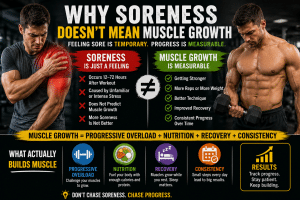
But muscle growth still requires:
- Progressive overload
- Adequate protein intake
- Caloric control
- Recovery
- Sleep optimization
Peptides are not a replacement for discipline.
They may amplify results if the fundamentals are already optimized.
Peptides vs Steroids
| Peptides | Steroids |
|---|---|
| Signal-based | Direct anabolic hormone |
| Often milder | Strong anabolic effect |
| Slower results | Rapid size increase |
| Less suppression (usually) | Significant testosterone suppression |
| Limited long-term data | Extensive long-term data (positive and negative) |
Steroids directly introduce synthetic testosterone derivatives. Peptides attempt to stimulate your body’s own systems.
Both carry risks. Neither is magic.
Natural Ways to Optimize Peptide and Hormone Production
Before considering injections, optimize the basics:
1. Sleep
Deep sleep drives growth hormone pulses.
2. Resistance Training
Heavy compound movements stimulate natural anabolic signaling.
3. Intermittent Fasting
Short fasting windows may enhance growth hormone levels.
4. Protein Intake
Adequate amino acids support natural peptide signaling.
5. Collagen Supplementation
Supports connective tissue health naturally.
6. Stress Management
High cortisol suppresses anabolic pathways.
Many people jump to peptides before mastering these foundations.
That’s backwards.
The Longevity Angle
In anti-aging clinics, peptides are often marketed for:
- Skin rejuvenation
- Fat loss
- Hormone restoration
- Cognitive support
While early research is promising, long-term safety data is incomplete.
Longevity is not about shortcuts — it is about sustainability.
Who Should Consider Peptides?
Peptides may be appropriate under medical supervision for:
- Hormone deficiencies
- Injury recovery
- Certain age-related conditions
- Research settings
They are not appropriate for:
- Teenagers
- Individuals without medical oversight
- People looking for quick shortcuts
- Those unwilling to optimize lifestyle factors
The Ethical and Performance Question
There is a difference between:
- Therapeutic use
- Performance enhancement
- Cosmetic enhancement
Each carries different moral, medical, and regulatory implications.
Transparency matters — especially in competitive environments.
Final Thoughts: Are Peptides Worth It?
Peptides represent a powerful area of biological research.
They are not magic.
They are not risk-free.
They are not replacements for discipline.
For serious athletes, aging adults seeking optimization, or individuals recovering from injury, medically supervised peptide therapy may offer benefits.
For beginners chasing shortcuts — the fundamentals will outperform pharmaceuticals every time.
Train hard.
Sleep well.
Eat real food.
Recover properly.
Then, and only then, consider advanced tools.
Read Next…
- COVID-19: Experimental Peptide Help to Avoid the Virus
- Collagen Protein – Try for Your Health and Fitness Goals
- Unlock Muscle Gains: 5 Top Proteins You Aren’t Eating Yet!
- 12 Major Anti-Aging Pathways That Support Longevity and Youthful Vitality
- 5 Powerful Plants That Help Reverse Aging (From the Inside Out)
🌿 Natural Daily Support for Men and Women
I like Divine Bounty supplements because they use natural ingredients instead of synthetic formulas. For people who want a cleaner option for everyday wellness support, Divine Bounty offers quality supplements designed to fit a healthy lifestyle.
Their lineup includes the popular Men’s Multivitamin, plus other supplements for men and women such as Vitamin B Complex, Digestive Enzymes, Berberine, Magnesium Citrate, Vitamin K2 + D3, and Acetyl L-Carnitine.
The Men’s Multivitamin features 24 essential vitamins and minerals plus 5 additional blends for men, all in convenient vegetarian capsules. It is also promoted as GMO free, soy free, dairy free, wheat free, and gluten free.
🛒 Shop Divine Bounty on AmazonSponsored by Terry Clark • Amazon Affiliate Partner