Estimated reading time: 6 minutes
Muscle is the currency of health and fitness. The more lean muscle you build and maintain, the easier it becomes to burn calories, improve insulin sensitivity, support joints, increase metabolism, and protect long-term health. Muscle is not just about aesthetics or bodybuilding. It improves strength, mobility, posture, athletic performance, and even healthy aging. Research consistently shows that people with more lean muscle mass tend to have better metabolic health and lower risks of chronic disease.
That is why understanding how amino acids, peptides, and muscle growth protein work together is critical for anyone pursuing fat loss, athletic performance, or longevity.
The equation is simple:
Calories + protein + resistance training + recovery = muscle adaptation.
But the quality of those inputs determines your results.
Why Is Muscle So Important for Health?
Muscle is metabolically active tissue. It burns calories at rest, stores glycogen for energy, and helps regulate blood sugar. Losing muscle can slow metabolism and reduce strength, mobility, and quality of life.
As people age, they naturally lose muscle mass through a process called sarcopenia. Without resistance training and proper nutrition, adults can lose 3% to 8% of muscle mass per decade after age 30.
Think about the math:
- More muscle = higher calorie burn
- Higher calorie burn = easier fat loss
- Better insulin sensitivity = improved health markers
- Greater strength = better performance and injury prevention
Muscle also acts like armor for the body. Strong muscles protect joints, improve balance, and reduce the likelihood of falls and injuries.
According to the Faith & Fit content library, muscle development remains one of the most important foundations for long-term fitness success.
What Are Amino Acids and Why Do They Matter?
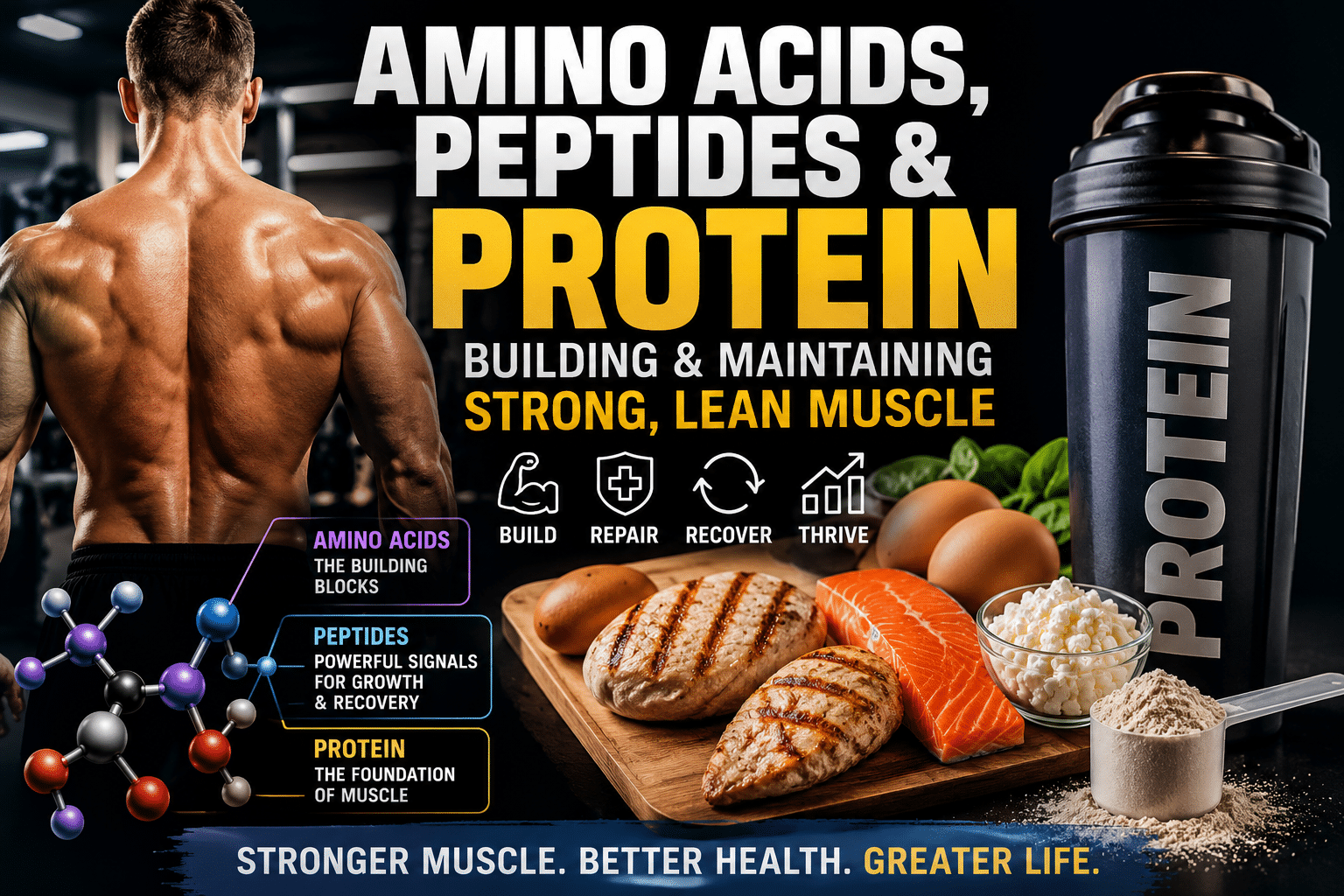
Amino acids are the building blocks of protein. When you eat protein-rich foods, your digestive system breaks those proteins into amino acids that your body uses to repair and build muscle tissue.
There are 20 amino acids, but 9 are considered essential because the body cannot produce them on its own.
The three branched-chain amino acids (BCAAs) are especially important:
- Leucine
- Isoleucine
- Valine
Leucine is the king of muscle building because it activates muscle protein synthesis, the process responsible for repairing and growing muscle tissue after training.
Think of leucine like flipping the “muscle-building switch.”
Most people need around 2.5 to 3 grams of leucine per meal to maximize muscle protein synthesis.
High-quality muscle growth protein sources include:
- Chicken breast
- Eggs
- Lean beef
- Greek yogurt
- Whey protein
- Fish
- Cottage cheese
Plant proteins can also work, but they may require larger servings to provide enough leucine and essential amino acids.
How Does Protein Build Muscle?
Protein provides the raw materials needed for muscle repair and growth. Resistance training creates microscopic muscle damage. Protein helps rebuild those fibers stronger than before.
Muscle growth happens when muscle protein synthesis exceeds muscle protein breakdown.
That means your results depend on:
- Training intensity
- Total daily protein intake
- Recovery quality
- Sleep
- Calorie intake
Most active individuals benefit from consuming:
- 0.7 to 1 gram of protein per pound of body weight daily
For example:
- A 180-pound person may need 130 to 180 grams of protein daily.
Spreading protein across 4 to 6 meals improves muscle protein synthesis throughout the day.
What Are Peptides and How Are They Used?
Peptides are short chains of amino acids that act as signaling molecules in the body. Some peptides naturally occur in the body and help regulate hormones, recovery, growth, and tissue repair.
In the fitness world, peptides are often discussed for their potential effects on:
- Recovery
- Muscle preservation
- Growth hormone support
- Collagen production
- Fat metabolism
However, there is an important distinction between legal wellness peptides and performance-enhancing substances.
Certain collagen peptides may support joint health and recovery. Collagen contains amino acids like glycine and proline that help support connective tissues.
Some medically prescribed peptides are being researched for muscle preservation and recovery, but many remain controversial and should only be used under medical supervision.
The foundation of muscle building still comes back to:
- Resistance training
- Progressive overload
- Recovery
- Quality muscle growth protein intake
No peptide can replace consistent habits.
Can You Build Muscle While Losing Fat?
Yes, especially for beginners, overweight individuals, or people returning to training.
The key is creating a moderate calorie deficit while maintaining high protein intake and resistance training.
The math looks like this:
- Calorie deficit = fat loss
- High protein = muscle preservation
- Resistance training = muscle-building signal
This is why muscle growth protein becomes essential during fat loss phases.
Without enough protein, the body may break down muscle tissue for energy. With enough protein, the body is more likely to preserve lean mass while losing fat.
What Is the Best Timing for Protein Intake?
Protein timing matters less than total daily intake, but distributing protein evenly across the day improves muscle protein synthesis.
Good times to consume muscle growth protein include:
- Breakfast
- Pre-workout meal
- Post-workout meal
- Before bed
Pre-bed protein can help support overnight muscle recovery. Slow-digesting proteins like casein cottage cheese or Greek yogurt work especially well.
Why Does Resistance Training Matter So Much?
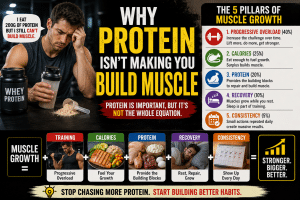
Protein alone will not build muscle effectively without resistance training.
Training provides the stimulus.
Protein provides the building blocks.
Muscle growth occurs when you challenge muscles through:
- Progressive overload
- Mechanical tension
- Training volume
- Intensity
You should regularly experience:
- Muscle fatigue
- Increased breathing
- Sweat
- Performance progression
That combination signals adaptation.
What Foods Support Muscle Growth Best?
Some of the best muscle-building foods include:
- Eggs
- Salmon
- Lean steak
- Chicken breast
- Greek yogurt
- Whey protein
- Beans
- Rice
- Potatoes
- Oats
- Fruit
Carbohydrates also matter because they fuel workouts and replenish muscle glycogen.
A strong training session requires energy.
Without enough carbohydrates, performance can decline, reducing training quality and muscle growth potential.💪 Muscle Building Essentials
Support your workouts, recovery, and long-term fitness goals with these recommended tools:
“Muscle is one of the greatest investments you can make for your metabolism, strength, and long-term health.”
Are Supplements Necessary for Muscle Growth?
Supplements are optional, not mandatory.
Whole foods should provide the foundation of your nutrition plan. However, supplements can help fill nutritional gaps and improve convenience.
Popular muscle-building supplements include:
- Whey protein
- Creatine monohydrate
- Essential amino acids
- Electrolytes
- Fish oil
Creatine remains one of the most researched and effective supplements for improving strength, muscle fullness, and performance.
What Is the Biggest Muscle-Building Mistake?
The biggest mistake is inconsistency.
Many people jump from workout to workout or diet to diet without tracking progress long enough to see adaptation.
Muscle growth requires:
- Consistency
- Progressive overload
- Adequate calories
- High protein intake
- Recovery
The body adapts slowly. Small improvements repeated weekly create dramatic long-term changes.
If you improve training performance by just 1% each week, those improvements compound over time into significant muscle and strength gains.
Key Takeaways
- Muscle improves metabolism, strength, health, and longevity.
- Amino acids are the building blocks of protein and support muscle repair.
- Leucine plays a major role in activating muscle protein synthesis.
- Peptides may support recovery and tissue health, but they are not magic solutions.
- Resistance training and adequate protein intake remain the foundation of muscle growth.
- Most people benefit from consuming 0.7 to 1 gram of protein per pound of body weight daily.
- Consistency with nutrition, training, sleep, and recovery drives results.
For more muscle-building and nutrition content, explore the growing article archive at Faith & Fit Articles and review the extensive sitemap of fitness content topics already covered on the site.
External Resources
🌿 Natural Daily Support for Men and Women
I like Divine Bounty supplements because they use natural ingredients instead of synthetic formulas. For people who want a cleaner option for everyday wellness support, Divine Bounty offers quality supplements designed to fit a healthy lifestyle.
Their lineup includes the popular Men’s Multivitamin, plus other supplements for men and women such as Vitamin B Complex, Digestive Enzymes, Berberine, Magnesium Citrate, Vitamin K2 + D3, and Acetyl L-Carnitine.
The Men’s Multivitamin features 24 essential vitamins and minerals plus 5 additional blends for men, all in convenient vegetarian capsules. It is also promoted as GMO free, soy free, dairy free, wheat free, and gluten free.
🛒 Shop Divine Bounty on AmazonSponsored by Terry Clark • Amazon Affiliate Partner