Estimated reading time: 6 minutes
Walk through any grocery store today and you’ll notice an increasing number of freeze-dried fruit products lining the shelves. They promise the nutrition of fresh fruit with the convenience of a pantry snack. But does freeze-dried fruit really offer the same health benefits as fresh fruit?
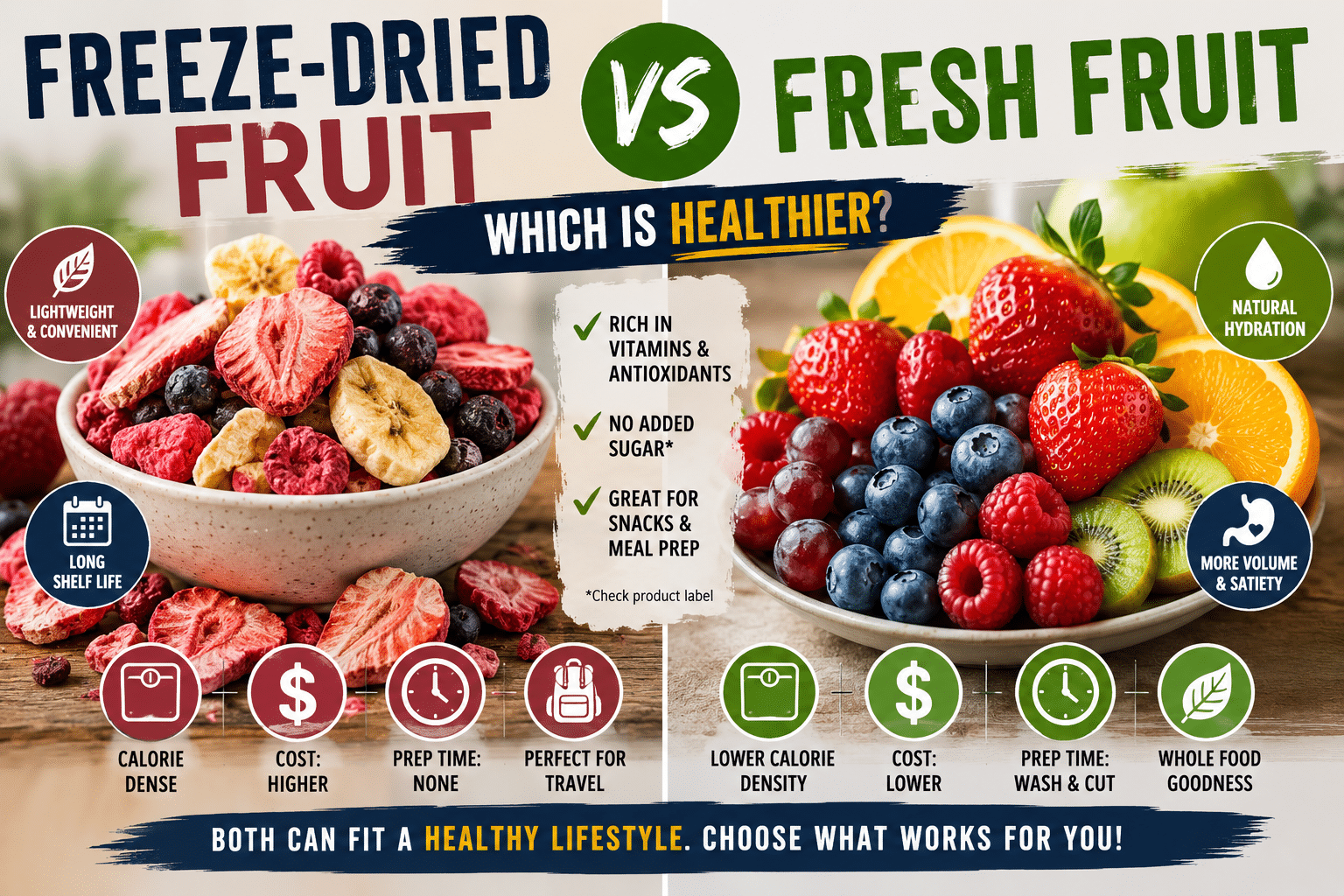
The answer is more nuanced than many people realize. Freeze-dried fruit vs fresh fruit isn’t about determining a winner. Instead, it’s about understanding when each option provides the greatest value. Whether your goal is fat loss, muscle building, convenience, or saving money over time, knowing the differences can help you make smarter nutritional decisions.
What Is Freeze-Dried Fruit?
Freeze-dried fruit begins as fresh fruit. Manufacturers rapidly freeze it before placing it under a vacuum. During this process, the frozen water inside the fruit turns directly into vapor without becoming liquid, a process known as sublimation.
Because very little heat is used, much of the fruit’s original structure remains intact.
Unlike traditional dried fruit, freeze-dried fruit contains:
- No added sugar (unless flavored)
- No preservatives in many brands
- Nearly all of its original vitamins and minerals
- Extremely low moisture
The result is a lightweight, crispy snack with an impressive shelf life.
Is Freeze-Dried Fruit as Healthy as Fresh Fruit?
Surprisingly, yes—at least nutritionally.
Research shows freeze-drying preserves approximately 90% to 97% of most vitamins, minerals, antioxidants, and phytonutrients. Vitamin C experiences the greatest losses, but many nutrients remain remarkably stable.
Fresh fruit still offers slight nutritional advantages because:
- It contains maximum vitamin C.
- It provides natural hydration.
- It hasn’t undergone any processing.
However, the nutritional differences are often much smaller than most people expect.
If fresh berries aren’t available or frequently spoil in your refrigerator, freeze-dried berries are certainly healthier than skipping fruit altogether.
How Does Water Change Everything?
The biggest difference in the freeze-dried fruit vs fresh fruit debate is water.
Fresh fruit consists of approximately:
- Apples: 85% water
- Strawberries: 91% water
- Blueberries: 84% water
- Peaches: 89% water
Freeze-dried fruit removes nearly all of this moisture.
This creates two important effects:
1. Higher Calorie Density
One cup of fresh strawberries contains about 50 calories.
One cup of freeze-dried strawberries can contain over 180 calories because dozens of berries now fit into the same volume.
2. Reduced Fullness
Water helps stretch the stomach and increase satiety. Without water, it’s easy to eat several servings of freeze-dried fruit without realizing it.
For weight loss, portion control becomes especially important.
Which Fruit Costs More?
Many shoppers experience sticker shock when purchasing freeze-dried fruit.
Here’s an approximate comparison.
| Fruit | Fresh | Freeze-Dried |
|---|---|---|
| Strawberries | $3–5 per pound | $18–30 per pound |
| Blueberries | $4–7 per pound | $25–40 per pound |
| Apples | $2–3 per pound | $12–20 per pound |
At first glance, fresh fruit appears far less expensive.
However, fresh fruit also has hidden costs:
- Spoilage
- Refrigeration
- Seasonal price increases
- Food waste
If you regularly throw away spoiled fruit, freeze-dried fruit may actually become more economical over time because nearly every ounce gets eaten.
Which Lasts Longer?
This category isn’t even close.
Fresh fruit typically lasts:
- Berries: 3–7 days
- Apples: 1–2 months
- Bananas: 5–7 days
Freeze-dried fruit can last:
- 6–12 months after opening
- Up to 25 years when unopened in commercial storage
For emergency food storage, camping, hiking, travel, or meal prep, freeze-dried fruit offers enormous advantages.
Which Is Better for Weight Loss?
If your goal is fat loss, fresh fruit generally wins.
Here’s the math.
Suppose hunger satisfaction equals:
Fiber + Water + Volume = Satiety
Fresh fruit contains all three.
Freeze-dried fruit contains mostly fiber but very little water.
This means:
- Fresh apple = about 95 calories
- Freeze-dried apple slices can easily reach 250–300 calories before you feel equally full.
That’s why many people unintentionally overeat freeze-dried fruit.
A simple strategy is measuring freeze-dried fruit into individual servings rather than eating directly from the bag.
Is Freeze-Dried Fruit Better for Athletes?
Athletes may actually benefit more from freeze-dried fruit in certain situations.
Advantages include:
- Lightweight for travel
- Quick carbohydrate source
- Easy digestion before workouts
- No refrigeration
- Excellent for hiking and endurance events
Bodybuilders can also mix freeze-dried fruit into:
- Greek yogurt
- Oatmeal
- Cottage cheese
- Protein shakes
The concentrated carbohydrates help replenish glycogen after hard training.
Which Provides More Antioxidants?
This is one of the biggest surprises.
Because freeze-dried fruit loses water instead of nutrients, antioxidants become highly concentrated by weight.
Blueberries, strawberries, raspberries, cherries, and blackberries retain much of their polyphenol content after freeze-drying.
That means a small serving packs significant antioxidant power.
Fresh fruit still provides similar nutrients, but they’re diluted by water.
Can Freeze-Dried Fruit Replace Fresh Fruit?
Not completely.
Fresh fruit remains the gold standard because it provides:
- Hydration
- Greater fullness
- Better texture
- Maximum vitamin preservation
Freeze-dried fruit works best as a supplement rather than a replacement.
Think of it as having two tools in your nutrition toolbox.
Fresh fruit belongs in your daily meals.
Freeze-dried fruit belongs in your gym bag, desk drawer, hiking backpack, or emergency pantry.
💪 FaithnFit Recommended Fitness Essentials
Support your nutrition and training with these trusted fitness products:
“Consistency beats perfection. Equip yourself for long-term success.”
Which Should You Choose?
The freeze-dried fruit vs fresh fruit comparison isn’t about one being superior.
Choose fresh fruit when you want:
- Maximum hydration
- Greater fullness
- Lower calorie density
- Daily meals
Choose freeze-dried fruit when you need:
- Long shelf life
- Convenience
- Travel-friendly snacks
- Emergency food storage
- Post-workout carbohydrates
The healthiest diet often includes both.
Fresh fruit should remain your foundation, while freeze-dried fruit fills the gaps when convenience matters. If having freeze-dried fruit on hand helps you eat more fruit overall, it’s a worthwhile investment in your long-term health.
Frequently Asked Questions
Is freeze-dried fruit processed?
Yes, but minimally. The process removes water while preserving most nutrients without requiring high heat.
Does freeze-dried fruit contain added sugar?
Most products contain only fruit. Always read the ingredient list, as some flavored varieties include added sugar.
Can diabetics eat freeze-dried fruit?
Yes, but portion control is important because the carbohydrates are concentrated.
Is freeze-dried fruit good for children?
Absolutely. It makes an excellent lunchbox snack without refrigeration, provided it contains no added sugars.
Key Takeaways
- Fresh fruit provides the best hydration and fullness.
- Freeze-dried fruit retains approximately 90–97% of nutrients.
- Freeze-dried fruit is more calorie-dense because water is removed.
- Fresh fruit is usually cheaper upfront.
- Freeze-dried fruit lasts dramatically longer and reduces food waste.
- Including both options in your diet offers the best balance of nutrition and convenience.
- Fighting Coronavirus – The Virus Threatens Food Supply
- Unlocking Weight Loss: Benefits of Fruit
- What Are the Benefits of Bodyweight Training?
- 10 Fruits That Will Help You Reach Your Health and Fitness Goals
- Different Ways To Get in Shape This Summer
🌿 Natural Daily Support for Men and Women
I like Divine Bounty supplements because they use natural ingredients instead of synthetic formulas. For people who want a cleaner option for everyday wellness support, Divine Bounty offers quality supplements designed to fit a healthy lifestyle.
Their lineup includes the popular Men’s Multivitamin, plus other supplements for men and women such as Vitamin B Complex, Digestive Enzymes, Berberine, Magnesium Citrate, Vitamin K2 + D3, and Acetyl L-Carnitine.
The Men’s Multivitamin features 24 essential vitamins and minerals plus 5 additional blends for men, all in convenient vegetarian capsules. It is also promoted as GMO free, soy free, dairy free, wheat free, and gluten free.
🛒 Shop Divine Bounty on AmazonSponsored by Terry Clark • Amazon Affiliate Partner