Estimated reading time: 6 minutes
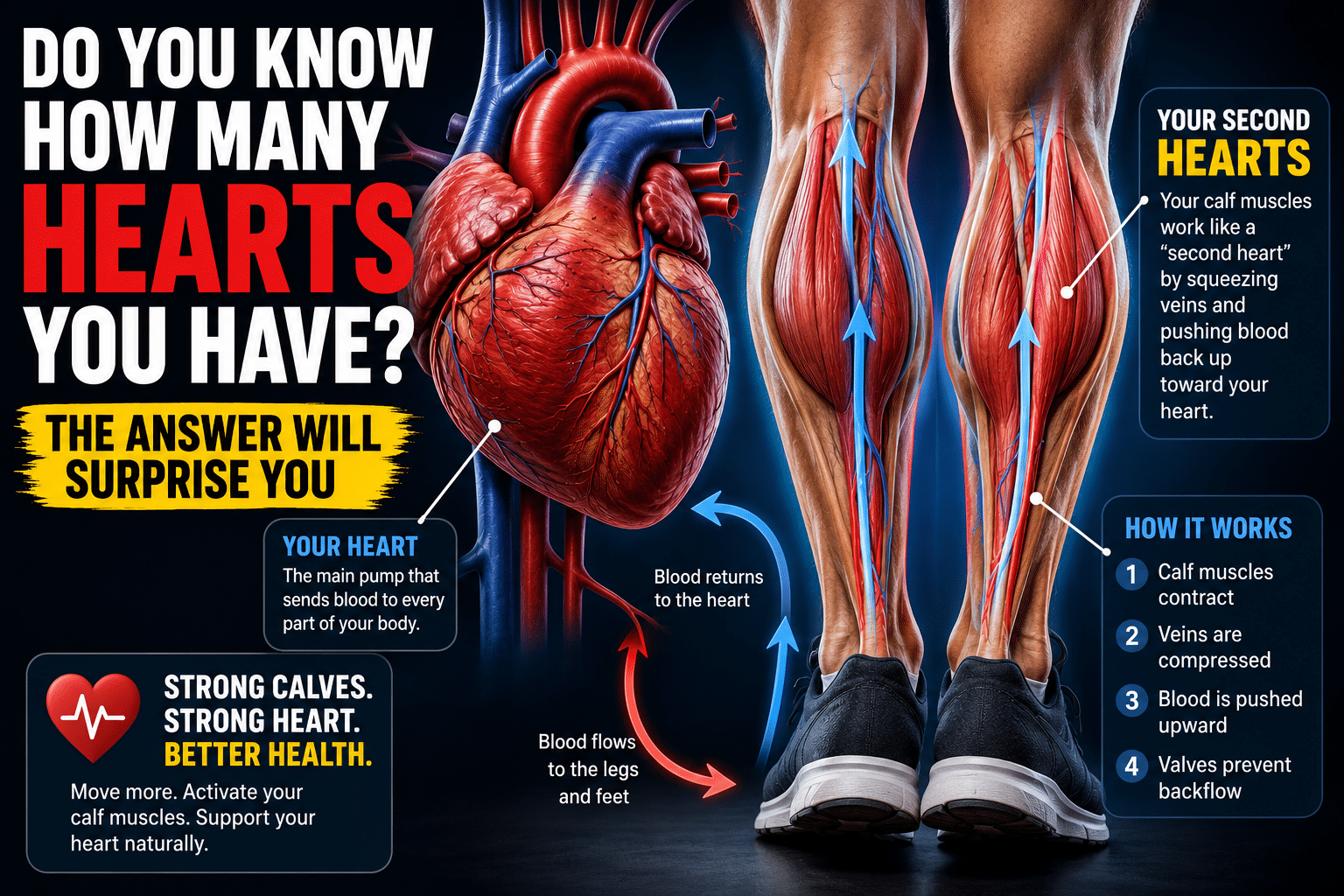
Most people think they have one heart. Anatomically, that’s true. But functionally, your body relies on three powerful pumps to keep blood moving every second of the day. Along with your heart, your left and right calf muscle pump work like two additional hearts, helping return blood from your feet and legs back to your chest.
Without these two muscular pumps, gravity would make it much harder for blood to travel uphill from your lower body. Every step you take activates your calf muscle pump, squeezing veins and pushing blood upward toward your heart. The result is better circulation, less swelling, improved endurance, and a healthier cardiovascular system.
Many health experts even refer to the calf muscles as the body’s “second heart.” Since you have two calves, you could think of your circulation as being powered by one heart and two powerful assistants.
What Is the Calf Muscle Pump?
Your calf muscles are made primarily of the gastrocnemius and soleus muscles. Between these muscles run deep veins equipped with one-way valves.
Every time you walk, climb stairs, or perform a calf raise, the muscles contract and squeeze these veins. This action forces blood upward toward the heart while the valves prevent blood from flowing backward.
Think of it like squeezing toothpaste from the bottom of the tube. Every squeeze moves the blood one step closer to your heart.
Without movement, gravity works against you. Blood begins to pool in your legs, making your heart work harder to maintain healthy circulation.
Why Is the Calf Muscle Pump Called the Second Heart?
The nickname comes from its remarkable ability to move blood.
Your heart pushes oxygen-rich blood throughout your body. After your muscles use that oxygen, the blood must travel all the way back to the heart.
Returning blood from your feet is especially difficult because gravity is pulling in the opposite direction.
The calf muscle pump solves this problem by generating pressure every time you move. Researchers estimate that walking dramatically improves venous return because of these repeated muscle contractions.
If your heart is the engine, your calves are the booster pumps that keep everything flowing efficiently.
Does the Body Really Have Three Hearts?
Not anatomically.
Humans have only one biological heart.
However, from a circulation standpoint, your body depends on three major pumping systems:
- Your heart pumps blood throughout the body.
- Your left calf muscle pump helps return blood upward.
- Your right calf muscle pump performs the same function on the opposite leg.
Together, these three pumps keep blood circulating efficiently.
This explains why people who remain inactive for long periods often experience swollen ankles, tired legs, or poor circulation.
Why Is the Calf Muscle Pump So Important?
Your calf muscle pump affects far more than your legs.
Healthy calf muscles help:
- Reduce swelling in the feet and ankles.
- Improve circulation throughout the body.
- Lower the risk of blood pooling.
- Support healthy blood pressure regulation.
- Improve exercise endurance.
- Deliver oxygen and nutrients more efficiently.
- Reduce feelings of heavy, tired legs.
Poor calf pump function has been linked to chronic venous insufficiency, varicose veins, and reduced mobility, especially among older adults.
What Happens When the Calf Muscle Pump Stops Working?
Imagine sitting at a desk for eight hours.
Your heart continues pumping blood downward, but your calves barely contract.
Eventually:
- Blood begins pooling in the lower legs.
- Pressure inside the veins increases.
- Ankles swell.
- Legs feel heavy.
- Circulation becomes less efficient.
Now imagine taking a five-minute walk.
Within minutes, your calf muscles begin squeezing the veins dozens of times, helping move blood back toward your heart.
Movement truly is medicine.
How Walking Strengthens Your Calf Muscle Pump
Walking is one of the best exercises for improving circulation because every step activates the calf muscles.
Let’s do the math.
An average person takes approximately 2,000 steps per mile.
Walking just three miles per day activates your calf muscle pump roughly 6,000 times.
Over one year, that’s more than 2 million muscle contractions helping return blood to your heart.
That’s free cardiovascular assistance simply by walking.
Which Exercises Improve the Calf Muscle Pump?
You don’t need expensive equipment.
Some of the best exercises include:
- Walking
- Hiking
- Standing calf raises
- Seated calf raises
- Jump rope
- Stair climbing
- Cycling
- Dancing
The key is consistency.
Even standing up every hour during the workday helps reactivate your calf muscles.
💪 FaithnFit Recommended Fitness Essentials
Support your circulation, muscle health, and overall fitness with these recommended products.
“Strong calves don’t just build stronger legs—they help power your entire circulatory system.”
Can You Tell If Your Calf Muscle Pump Is Weak?
You may notice:
- Swollen ankles after sitting
- Legs that feel heavy by evening
- Frequent leg cramps
- Varicose veins
- Reduced walking endurance
- Cold feet
- Slow recovery after standing
If these symptoms are persistent or severe, consult your healthcare provider, as they may indicate an underlying vascular condition.
How Can You Keep Your Three Pumps Healthy?
The formula is surprisingly simple.
Move more.
Walk daily.
Strength train your calves at least twice each week.
Avoid sitting for hours without getting up.
Maintain a healthy body weight to reduce stress on your circulatory system.
Stay hydrated, since blood flows more efficiently when you’re properly hydrated.
Finally, listen to your body. If your legs feel stiff after sitting, they’re reminding you that your calf muscle pumps were designed to move.
The Bottom Line
Your body has only one anatomical heart, but your circulation depends on three powerful pumps working together. Your heart supplies the force to move blood throughout your body, while each calf muscle pump acts like a powerful assistant, pushing blood back toward your chest against gravity.
That’s why every walk, every stair climbed, and every calf raise is doing far more than strengthening your legs. You’re helping your circulatory system operate more efficiently.
The next time someone asks how many hearts you have, you can confidently answer:
One anatomical heart—but three powerful pumps keeping me alive.
Frequently Asked Questions
Can weak calf muscles affect circulation?
Yes. Weak or inactive calf muscles reduce venous return, allowing blood to pool in the legs.
Is walking enough to strengthen the calf muscle pump?
For most healthy adults, daily walking is one of the best ways to maintain an effective calf muscle pump.
Can sitting all day weaken the calf muscle pump?
Yes. Long periods of inactivity reduce muscle contractions that help return blood to the heart.
Are calf raises good for circulation?
Absolutely. Calf raises strengthen the muscles responsible for pumping blood upward and can improve lower-leg circulation over time.
Read more: Do You Know How Many Hearts You Have? The Answer Will Surprise You
- The Impact of ‘Pumping Iron’ on Bodybuilding Culture
- What Are Some Harmful Bodybuilding Myths that Still Exist?
- Exploring Kratom’s Potential as a Pre-Workout Supplement for Endurance and Stamina
- Weighted Standing Calf Raise – How to Build Strength
- Standing Calf Raise – How to Push for Perfection
🌿 Natural Daily Support for Men and Women
I like Divine Bounty supplements because they use natural ingredients instead of synthetic formulas. For people who want a cleaner option for everyday wellness support, Divine Bounty offers quality supplements designed to fit a healthy lifestyle.
Their lineup includes the popular Men’s Multivitamin, plus other supplements for men and women such as Vitamin B Complex, Digestive Enzymes, Berberine, Magnesium Citrate, Vitamin K2 + D3, and Acetyl L-Carnitine.
The Men’s Multivitamin features 24 essential vitamins and minerals plus 5 additional blends for men, all in convenient vegetarian capsules. It is also promoted as GMO free, soy free, dairy free, wheat free, and gluten free.
🛒 Shop Divine Bounty on AmazonSponsored by Terry Clark • Amazon Affiliate Partner