
Estimated reading time: 9 minutes
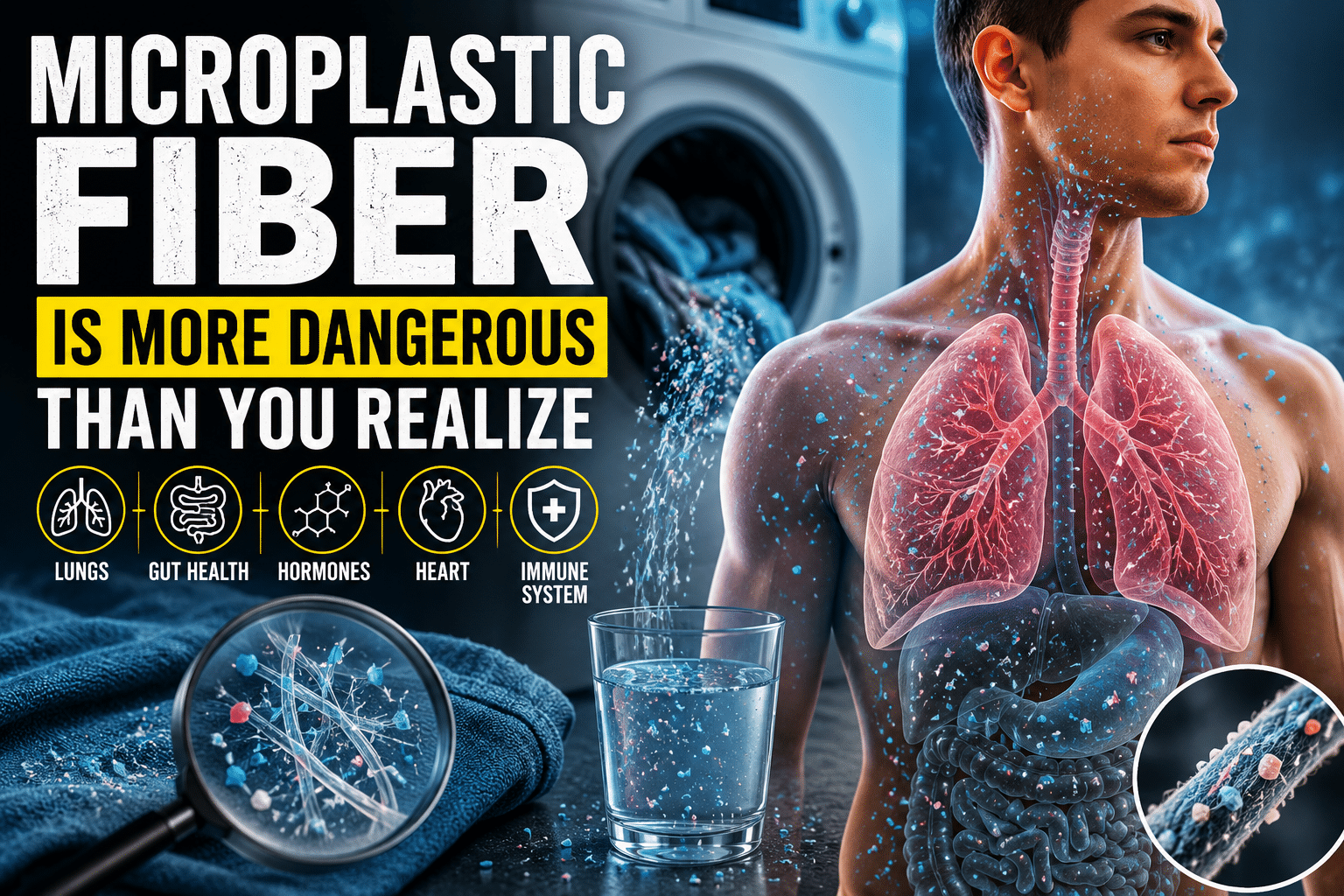
Every time you pull on a polyester workout shirt, wash synthetic clothing, or drink bottled water, you’re likely being exposed to microplastic fiber. These tiny strands of plastic have become one of the fastest-growing environmental and health concerns in the world. Once considered harmless because they were invisible to the naked eye, researchers now believe these microscopic fibers may be accumulating throughout the human body—including the lungs, bloodstream, placenta, and even the brain.
For years, scientists focused on larger pieces of plastic pollution floating in oceans. Today, the concern has shifted to something much smaller but potentially more dangerous. Unlike visible plastic waste, microplastic fiber particles can be inhaled, swallowed, and absorbed without you ever noticing.
For anyone pursuing better health, building muscle, or losing fat, this matters. Your body performs best when inflammation is low, hormones function properly, and every organ can efficiently transport oxygen and nutrients. If microplastic fibers interfere with those systems, even slightly, they could influence long-term health and athletic performance.
What Is Microplastic Fiber?
A microplastic fiber is a tiny strand of synthetic plastic measuring less than five millimeters long. Most originate from man-made fabrics including:
- Polyester
- Nylon
- Acrylic
- Spandex
- Fleece
- Rayon blends
Each time these materials are manufactured, worn, washed, or dried, thousands of microscopic fibers break free.
Unlike cotton or wool, these fibers do not biodegrade quickly. Instead, they circulate through rivers, oceans, household dust, drinking water, seafood, and eventually our own bodies.
Scientists estimate that millions of tons of plastic fibers enter the environment every year, making clothing one of the largest sources of microplastic pollution worldwide.
Why Is Microplastic Fiber Becoming a Health Concern?
Researchers once believed the body simply eliminated most plastic particles. Recent studies suggest the story is far more complicated.
Scientists have now identified plastic particles inside:
- Human blood
- Lung tissue
- Liver
- Kidneys
- Placenta
- Breast milk
- Brain tissue
Finding plastic inside organs doesn’t automatically prove disease. However, it raises important questions about long-term exposure and how these particles interact with cells.
Think of it like breathing dust every day. One exposure isn’t likely to matter much. But thousands of exposures over decades create a completely different equation.
As I often explain to clients, health follows math.
Small behaviors multiplied by thousands of repetitions eventually produce measurable outcomes.
Microplastic exposure follows the same principle.
How Does Microplastic Fiber Enter Your Body?
Most people assume food is the primary source, but that’s only one pathway.
Breathing Indoor Air
Your home may contain more plastic fibers than the outdoors.
Synthetic carpets, furniture, bedding, curtains, and athletic clothing constantly shed microscopic fibers into the air.
Every breath becomes another opportunity for inhalation.
People who exercise indoors or spend long hours inside offices may unknowingly inhale thousands of fibers every day.
Drinking Water
Researchers have detected plastic particles in:
- Tap water
- Bottled water
- Ice
- Coffee
- Tea
Bottled water often contains significantly more plastic particles than filtered tap water because the bottle itself sheds microscopic fragments.
Eating Food
Plastic fibers have been found in numerous foods, including:
- Fish
- Shellfish
- Sea salt
- Honey
- Fruits
- Vegetables
Plants can absorb tiny plastic particles through contaminated soil and irrigation water, allowing them to move into the food chain.
Wearing Synthetic Clothing
This is especially relevant for fitness enthusiasts.
Modern workout apparel is designed to stretch, wick sweat, and dry quickly.
Unfortunately, these same fabrics continuously release microplastic fiber particles through friction during workouts and laundering.
Ironically, the clothing designed to improve athletic performance may also increase exposure.
Can Microplastic Fiber Affect Athletic Performance?
Research is still developing, but scientists have identified several possible mechanisms.
Increased Inflammation
The immune system recognizes foreign particles.
If plastic fibers remain inside tissues, the immune system may respond with chronic low-grade inflammation.
Inflammation is already one of the biggest barriers to:
- Muscle recovery
- Joint health
- Cardiovascular function
- Healthy aging
Even small increases over many years may influence recovery from training.
Oxidative Stress
Some laboratory studies suggest plastic particles generate oxidative stress.
Oxidative stress damages cells much like rust slowly damages steel.
Athletes already produce oxidative stress through intense exercise.
Adding another source may increase recovery demands.
Hormonal Disruption
Many plastics contain chemicals that may interfere with hormone signaling.
Hormones regulate nearly everything important to fitness:
- Testosterone
- Estrogen
- Insulin
- Cortisol
- Thyroid hormones
Even subtle disruptions could eventually affect energy, body composition, recovery, and metabolism.
Scientists are still determining how significant these effects are in humans, but the possibility has attracted growing attention.
Why Fitness Enthusiasts Should Pay Attention
Many people assume environmental health has little to do with building muscle or losing fat.
The opposite may be true.
Your body depends on countless biological systems working together.
Imagine your health like building a house.
Diet supplies the bricks.
Exercise provides the construction crew.
Sleep installs the electrical system.
Recovery finishes the interior.
Environmental exposures—including microplastic fiber—represent the weather constantly acting upon that house.
One storm rarely causes collapse.
Years of exposure eventually can.
That doesn’t mean panic is appropriate.
It means awareness is.
Understanding where microplastic fibers come from allows you to make smarter choices without becoming obsessed.
Is Microplastic Fiber More Dangerous Than Other Plastics?
Not all plastics pose the same level of concern. Large plastic items often pass through the environment relatively unchanged, but microplastic fiber particles are different because of their size. Their microscopic dimensions allow them to become airborne, contaminate food and water, and potentially enter tissues that larger plastic fragments cannot.
Researchers are especially concerned about particles smaller than 10 micrometers because they can reach deep into the lungs. Even smaller particles, called nanoplastics, may cross biological barriers and interact directly with cells.
Another concern is that plastic fibers can act like tiny sponges. As they move through the environment, they can attract pollutants such as heavy metals, pesticides, and industrial chemicals. When these fibers enter the body, scientists are investigating whether they may also carry these contaminants into tissues.
While researchers continue studying long-term effects, the evidence is strong enough to support reducing unnecessary exposure whenever possible.
How Can You Reduce Your Exposure to Microplastic Fiber?
Completely avoiding microplastic fiber is nearly impossible, but reducing exposure follows the same principle as improving nutrition: small habits add up over time.
Choose Natural Fabrics
Whenever practical, choose clothing made from:
- Cotton
- Linen
- Wool
- Hemp
- Bamboo
These materials shed biodegradable fibers instead of plastic.
Reserve synthetic workout clothing for activities where performance truly requires moisture-wicking fabrics.
Wash Synthetic Clothing Less Often
Most plastic fibers are released during washing.
Instead of washing gym clothes after every light workout:
- Air them out
- Spot clean when appropriate
- Wash full loads instead of partial loads
- Use cold water and gentle cycles
These habits reduce both fiber shedding and clothing wear.
Use a Microfiber Laundry Filter
Several companies now manufacture washing machine filters designed to capture plastic fibers before they enter wastewater.
Although they do not eliminate all fibers, they significantly reduce environmental pollution.
Vacuum With a HEPA Filter
Household dust contains thousands of synthetic fibers.
A vacuum equipped with a HEPA filter removes much finer particles than standard vacuums.
This can improve indoor air quality while reducing inhalation.
Improve Indoor Ventilation
Opening windows, using quality HVAC filters, and improving airflow can reduce airborne fiber concentrations.
Because most people spend approximately 90% of their lives indoors, cleaner indoor air may have a larger impact than many realize.
Drink Filtered Water
Reverse osmosis and high-quality carbon filtration systems appear to reduce many microplastic particles in drinking water.
Reusable stainless steel or glass bottles also reduce additional plastic exposure from disposable bottles.
Eat More Whole Foods
Highly processed foods often involve greater plastic contact during manufacturing and packaging.
A diet emphasizing:
- Fresh fruits
- Vegetables
- Lean proteins
- Whole grains
- Beans
- Nuts
supports overall health while reducing unnecessary plastic exposure.
As I often remind clients, every healthy meal solves multiple problems at once. Whole foods improve satiety, provide more nutrients, support recovery, and may also reduce contact with plastic packaging.
What Does the Research Say?
The science surrounding microplastic fiber is moving rapidly.
Researchers have linked microplastic exposure with potential effects involving:
- Chronic inflammation
- Oxidative stress
- Immune function
- Cardiovascular disease
- Reproductive health
- Hormonal regulation
- Gut microbiome changes
However, it is important to distinguish between association and causation.
Many studies have found microplastics in human tissues, but scientists are still determining whether the particles directly cause disease, contribute to disease, or simply accumulate alongside other risk factors.
That uncertainty should not be confused with safety. History has shown that environmental health hazards often take decades to fully understand. Lead, asbestos, and cigarette smoke all followed similar paths—from early concern to overwhelming scientific evidence.
Today’s research suggests that minimizing exposure is a reasonable precaution while scientists continue gathering long-term data.
Why This Matters for Long-Term Health
Good health is rarely determined by one decision.
Think about muscle gain.
Adding only five pounds to your squat every month equals sixty pounds in a year.
Likewise, cutting only 100 calories each day creates a deficit of more than 36,000 calories over a year.
Health compounds.
So does exposure.
If reducing your microplastic fiber exposure lowers inflammation by even a small amount over decades, that improvement may become meaningful when combined with regular exercise, quality nutrition, sufficient sleep, and stress management.
The goal is not perfection.
The goal is stacking small advantages in your favor.
That philosophy has always produced better long-term fitness results than chasing quick fixes.
Frequently Asked Questions
Is microplastic fiber harmful?
Current evidence suggests microplastic fiber exposure may contribute to inflammation, oxidative stress, and hormone disruption. Scientists are still determining the long-term health effects, but reducing unnecessary exposure is considered a sensible precaution.
Where do most microplastic fibers come from?
Synthetic clothing, household textiles, carpets, furniture, washing machines, and industrial manufacturing are among the largest sources.
Can exercise increase exposure?
Potentially. Wearing synthetic athletic clothing and exercising indoors where airborne fibers accumulate may increase exposure, although exercise itself remains one of the best ways to improve overall health.
Can the body remove microplastics?
Some particles appear to be eliminated naturally, but researchers have also detected microplastics in several organs, suggesting some particles may remain in the body for extended periods.
Should I stop wearing polyester workout clothes?
No. Instead, balance convenience with practical habits such as washing less frequently, choosing natural fabrics when possible, and replacing worn garments over time.
🏋️ Build a Healthier Lifestyle
Support your fitness journey with these recommended products:
“Small daily habits create extraordinary long-term health.”
Key Takeaways
- Microplastic fiber pollution is now found in air, food, water, and the human body.
- Synthetic clothing is one of the largest sources of microfiber pollution.
- Researchers have identified plastic particles in human blood, lungs, the placenta, and brain tissue.
- While definitive proof of long-term disease is still being studied, evidence supports minimizing unnecessary exposure.
- Small lifestyle changes can substantially reduce exposure without sacrificing fitness performance.
- Better health is built through consistent daily habits, and reducing environmental exposures is another way to support those habits.
Read more: Microplastic Fiber Is More Dangerous Than You Realize
- Staying Healthy on the Go: Eco-Friendly Hygiene Solutions for Active Lifestyles
- Leaky Gut – 8 Signs of a Unhealthy Stomach (and How to Fix It)
- Cold Exposure for Fat Loss and Recovery
- The Skin: Your Largest Organ—Why You Should Be Careful What You Put on It
- Natural Activities to Boost Your Immune System: A Comprehensive Guide
🌿 Natural Daily Support for Men and Women
I like Divine Bounty supplements because they use natural ingredients instead of synthetic formulas. For people who want a cleaner option for everyday wellness support, Divine Bounty offers quality supplements designed to fit a healthy lifestyle.
Their lineup includes the popular Men’s Multivitamin, plus other supplements for men and women such as Vitamin B Complex, Digestive Enzymes, Berberine, Magnesium Citrate, Vitamin K2 + D3, and Acetyl L-Carnitine.
The Men’s Multivitamin features 24 essential vitamins and minerals plus 5 additional blends for men, all in convenient vegetarian capsules. It is also promoted as GMO free, soy free, dairy free, wheat free, and gluten free.
🛒 Shop Divine Bounty on AmazonSponsored by Terry Clark • Amazon Affiliate Partner