Estimated reading time: 8 minutes
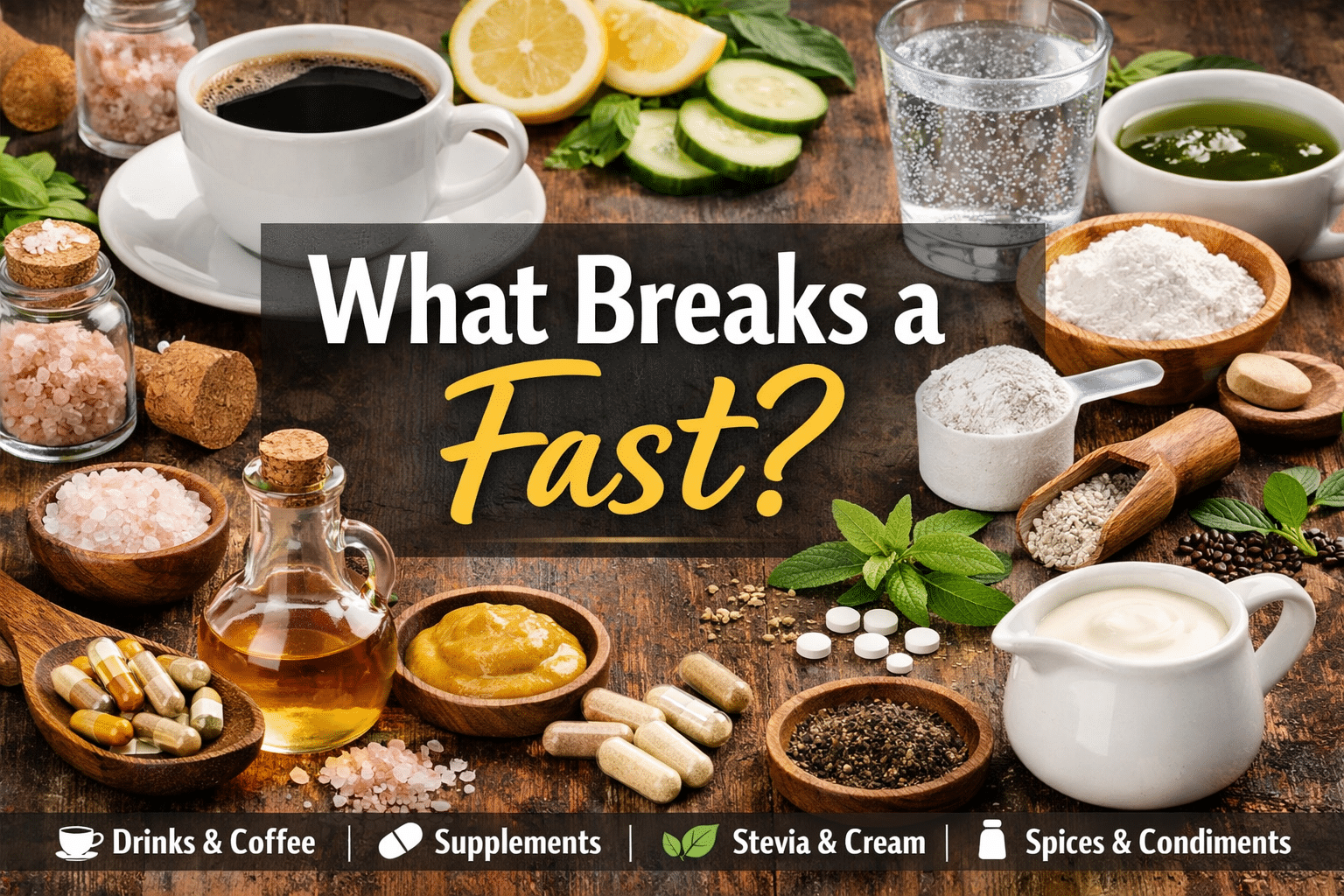
Do You Understanding Fasting for Physical Health and Spiritual Discipline? Fasting has become one of the most widely practiced strategies for improving metabolic health, fat loss, and mental clarity, but it also has deep historical roots in spiritual discipline and religious devotion. People fast to lose weight, reset metabolism, increase longevity, strengthen self-control, and deepen their relationship with God. It’s important to know what breaks a fast if you want to maximise the benefits of fasting for both health and spiritual purposes.
Despite the popularity of fasting, confusion remains about what actually breaks a fast. Many people know that eating food ends a fast, but questions often arise about coffee, sweeteners, supplements, electrolytes, or condiments. Some substances contain almost no calories but may still stimulate insulin or digestion, while others are metabolically neutral.
Understanding the difference between physical fasting and spiritual fasting is essential because the goals of each are different. Physical fasting focuses on metabolic outcomes such as fat burning and cellular repair, while spiritual fasting emphasizes humility, discipline, and devotion.
This guide explains which drinks, supplements, sweeteners, and condiments generally do not break a fast—and why.
What Actually Breaks a Fast
From a metabolic perspective, a fast is interrupted when something causes the body to shift away from the fasting state. This usually happens when a substance:
• Provides meaningful calories
• Raises insulin levels
• Activates digestion significantly
• Stops fat burning or autophagy
During a true fast the body moves from glucose metabolism to fat metabolism. Insulin levels drop, stored fat becomes the primary fuel source, and cellular repair processes increase. Anything that significantly disrupts this environment can weaken the benefits of fasting.
Small amounts of substances that contain very few calories and minimal metabolic impact often do not meaningfully interrupt fasting.
Drinks That Do Not Break a Fast
Water
Water is the most important fasting beverage because it contains zero calories and no metabolic stimulus. Hydration supports circulation, digestion, detoxification, and appetite control.
Water also helps reduce hunger during fasting because thirst is frequently mistaken for hunger.
Some people add small amounts of lemon, cucumber, or mineral salts to water for flavor and electrolyte balance without significantly affecting the fast.
Black Coffee
Black coffee is widely consumed during fasting periods. A typical cup contains two to five calories, which is metabolically insignificant.
Coffee does not meaningfully increase insulin when consumed without additives. It may even increase fat metabolism by stimulating the nervous system and promoting the release of fatty acids from fat tissue.
However, the benefits disappear quickly when additives are introduced. Adding sugar, milk, flavored syrups, or creamers will introduce calories and insulin stimulation.
Tea
Unsweetened tea is another fasting-friendly beverage. Green tea, black tea, oolong tea, and many herbal teas contain almost no calories.
Tea offers additional advantages during fasting because it contains antioxidants and compounds that may improve metabolic flexibility and fat oxidation.
The key rule remains simple: no sugar, honey, or milk.
Sparkling Water
Plain carbonated water is essentially water infused with carbon dioxide and contains no calories or carbohydrates.
It can be useful during fasting because the carbonation provides a feeling of fullness that may help control appetite. However, flavored sparkling waters sometimes contain artificial sweeteners that may increase cravings or trigger small insulin responses.
Sweeteners During a Fast
Sweeteners create one of the most debated areas in fasting.
Stevia
Stevia is a natural sweetener extracted from the leaves of the stevia plant. It contains no calories and does not raise blood sugar levels.
For many people practicing fasting for metabolic health, small amounts of stevia do not break a fast because it does not supply energy or significantly increase insulin. It is therefore often used to sweeten coffee or tea during fasting periods.
However, responses vary between individuals. Some people experience increased cravings or appetite after consuming sweeteners, even when they are calorie-free. In those cases, avoiding sweeteners may help maintain appetite control and fasting discipline.
From a spiritual fasting perspective, some individuals choose to avoid sweeteners entirely because the purpose of the fast includes removing pleasurable foods and flavors.
Supplements That Do Not Break a Fast
Certain supplements provide support during fasting without introducing calories or metabolic disruption.
Electrolytes
Electrolytes such as sodium, potassium, and magnesium are essential minerals that help regulate hydration, nerve function, and muscle contraction.
During fasting, the body excretes more sodium and water, which can lead to headaches, fatigue, or dizziness if electrolytes are not replenished. Electrolyte supplements that contain no sugar or carbohydrates generally do not break a fast.
Magnesium
Magnesium is commonly used to support muscle relaxation, sleep quality, and nervous system health. It contains no calories and therefore does not interrupt fasting metabolism.
Many people find magnesium particularly helpful when fasting because it may reduce muscle cramps and improve sleep.
Creatine
Creatine monohydrate is a compound that helps regenerate ATP, the body’s primary energy molecule. Because creatine contains no calories and does not stimulate insulin, it generally does not break a fast.
Athletes frequently take creatine during fasting periods to support strength and performance.
Vitamin Capsules
Most vitamin supplements provide micronutrients without calories. Capsules containing vitamin D, vitamin C, B vitamins, or multivitamins usually do not break a fast.
However, some vitamins may cause stomach irritation when taken without food, so individuals sometimes choose to take them during their eating window instead.
Condiments That Usually Do Not Break a Fast
Small amounts of certain condiments can be used during fasting because they contain minimal calories.
Apple Cider Vinegar
Apple cider vinegar is commonly consumed during fasting because it may help regulate blood sugar and reduce appetite. A tablespoon typically contains only three to five calories, which has negligible metabolic impact.
Many people dilute apple cider vinegar in water and drink it before meals or during fasting periods.
Salt
Salt contains no calories and plays an important role in maintaining electrolyte balance during fasting. A small pinch of sea salt in water can help prevent headaches, fatigue, and weakness during extended fasts.
Mustard
Plain mustard contains very few calories because it is primarily made from mustard seeds, vinegar, and spices. When consumed in small amounts it generally does not meaningfully affect fasting metabolism.
Spices
Dry spices such as black pepper, turmeric, cinnamon, and paprika contain negligible calories. They may even support metabolic health because many spices have anti-inflammatory or blood-sugar-regulating properties.
The Debate About Heavy Whipping Cream
Heavy whipping cream is frequently discussed in fasting communities because many people add it to coffee.
Unlike black coffee, heavy cream contains fat calories. One tablespoon typically contains around 50 calories and about 5 grams of fat. Because these calories provide energy, heavy cream technically breaks a strict fast.
However, the metabolic effect depends on the purpose of the fast.
When fasting primarily for fat loss, some people consume small amounts of heavy cream in coffee and remain in a fat-burning state because fat calories have a much smaller effect on insulin compared with carbohydrates.
This approach is sometimes called “dirty fasting.” It may still allow weight loss but reduces some of the deeper benefits of fasting, such as maximal fat mobilization and cellular repair.
For individuals fasting for autophagy, metabolic health, or spiritual discipline, avoiding heavy cream entirely is usually recommended.
Physical Fasting vs Spiritual Fasting
The interpretation of what breaks a fast often depends on the purpose of the fast.
Physical or Metabolic Fasting
When fasting for health, the goal is usually to maintain a metabolic state where insulin is low and fat burning is active.
Under this framework, substances that contain little or no calories and minimal insulin impact are often allowed. Examples include:
• water
• black coffee
• unsweetened tea
• electrolyte minerals
• stevia in small amounts
• vitamin supplements
These substances do not significantly disrupt the fasting metabolism.
Spiritual Fasting
Spiritual fasting is less about metabolism and more about discipline, reflection, and devotion. Many religious traditions encourage simplicity during fasting, sometimes limiting consumption to water or very basic liquids.
In this context, individuals may choose to avoid coffee, sweeteners, supplements, or flavorings because the intention of the fast includes removing comfort and focusing attention on prayer or meditation.
Different traditions practice fasting differently. Some allow liquids, others allow certain foods at specific times, and some follow strict abstinence during daylight hours.
Signs Your Fast Is Still Effective
When fasting is working properly, the body usually displays several indicators of metabolic adaptation.
Common signs include:
• reduced hunger after several hours
• improved mental clarity
• stable energy levels
• gradual fat loss
• improved blood sugar control
If hunger spikes frequently or energy crashes occur, something consumed during the fast may be stimulating insulin or digestion.
Final Thoughts
Fasting can be a powerful tool for improving health, strengthening discipline, and deepening spiritual awareness. The key to successful fasting is understanding which substances support the fasting state and which ones interrupt it.
Most fasting plans allow small amounts of substances that have minimal metabolic impact, including water, black coffee, unsweetened tea, electrolytes, and certain supplements.
Sweeteners such as stevia are generally considered fasting-friendly because they contain no calories, although individual responses vary. On the other hand, heavy whipping cream contains fat calories and technically breaks a strict fast, even though some people include it in modified fasting approaches.
Ultimately, the best approach depends on the goal of the fast. Physical fasting focuses on metabolic efficiency and fat burning, while spiritual fasting focuses on humility, discipline, and devotion.
When fasting is practiced intentionally and consistently, it can strengthen both body and spirit while teaching one of the most valuable human skills: self-control.
Read Next…
🌿 Natural Daily Support for Men and Women
I like Divine Bounty supplements because they use natural ingredients instead of synthetic formulas. For people who want a cleaner option for everyday wellness support, Divine Bounty offers quality supplements designed to fit a healthy lifestyle.
Their lineup includes the popular Men’s Multivitamin, plus other supplements for men and women such as Vitamin B Complex, Digestive Enzymes, Berberine, Magnesium Citrate, Vitamin K2 + D3, and Acetyl L-Carnitine.
The Men’s Multivitamin features 24 essential vitamins and minerals plus 5 additional blends for men, all in convenient vegetarian capsules. It is also promoted as GMO free, soy free, dairy free, wheat free, and gluten free.
🛒 Shop Divine Bounty on AmazonSponsored by Terry Clark • Amazon Affiliate Partner