Estimated reading time: 6 minutes
Many people notice unusual symptoms during aggressive dieting, including headaches, fatigue, brain fog, and digestive changes. Some attribute these symptoms to the Fat Loss Release Effect, a concept describing what happens when stored body fat is broken down and its contents are released into circulation. While the term is not an official medical diagnosis, it is based on real physiological processes involving fat metabolism, stored chemicals, and energy production.
Understanding the Fat Loss Release Effect can help explain why some people feel different during periods of rapid fat loss and why gradual, sustainable weight reduction is often recommended.
What Is the Fat Loss Release Effect?
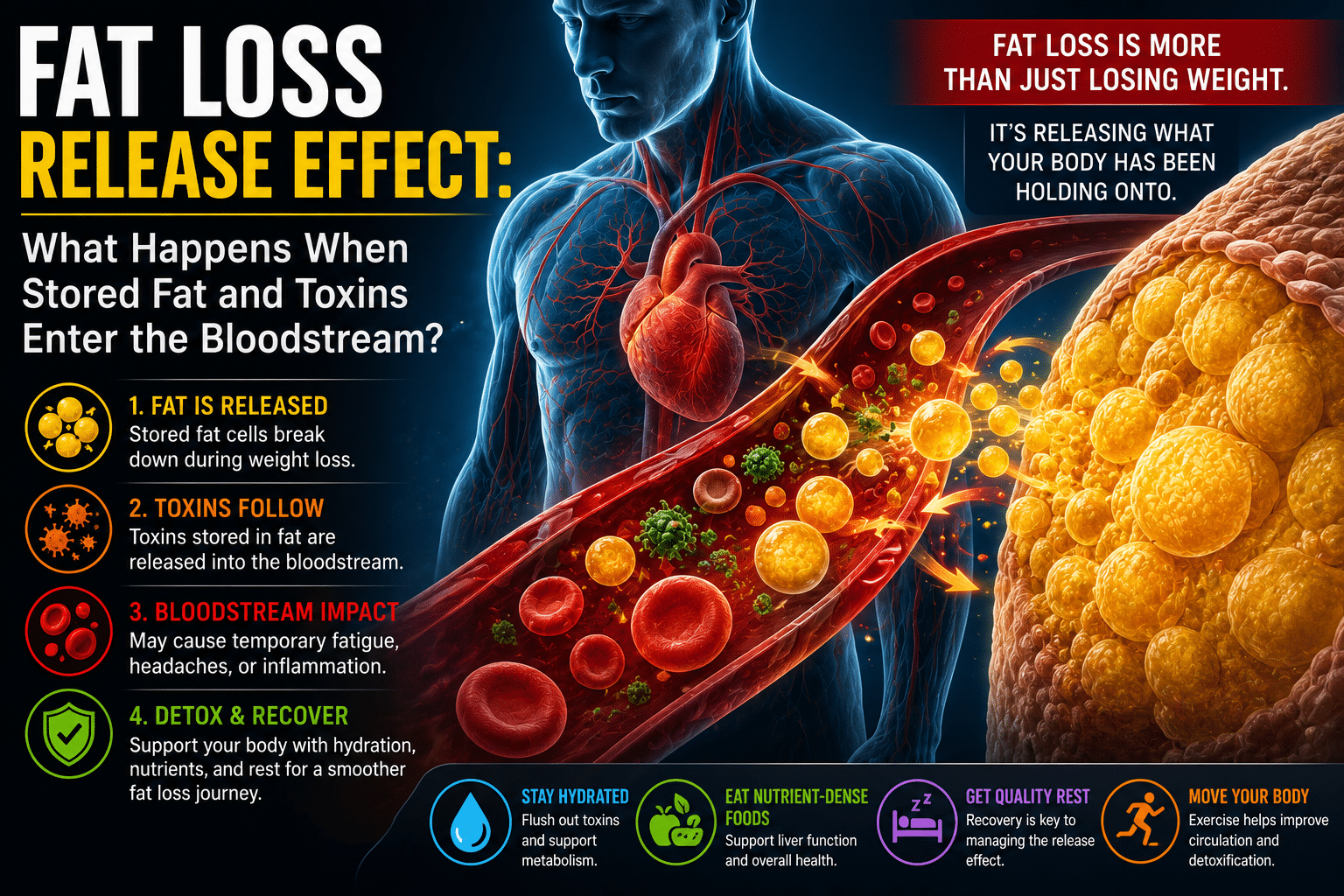
The Fat Loss Release Effect refers to the release of substances stored within fat cells as body fat is broken down for energy.
When the body enters a calorie deficit, hormones such as epinephrine, norepinephrine, and glucagon signal fat cells to release stored triglycerides. These triglycerides are broken into fatty acids and glycerol, which enter the bloodstream and are used for energy production.
Think of body fat as a storage warehouse. When the warehouse is opened, not only does energy leave the building, but other materials stored alongside that energy may leave as well.
This is where the concept becomes interesting.
Does Stored Fat Still Contain Nutrients?
A common question is whether body fat contains nutrients that can be reused during weight loss.
The answer is partially yes.
Body fat primarily stores energy in the form of triglycerides. Each gram of fat contains approximately 9 calories of energy. However, fat tissue also stores small amounts of:
- Fat-soluble vitamins (A, D, E, and K)
- Cholesterol
- Essential fatty acids
- Hormones and hormone precursors
Most nutrients originally consumed from food were already utilized by the body before excess calories were packaged into adipose tissue. The protein, vitamins, minerals, and carbohydrates from food generally perform their functions before any surplus energy is converted to stored fat.
In other words, when your body burns fat, it is primarily reclaiming stored energy rather than recovering large quantities of previously unused nutrients.
Using Terry Clark’s math-based perspective:
- Eat 3,000 calories
- Burn 2,500 calories
- Store 500 calories
The body has already extracted most of the useful nutrients before storing the excess 500 calories as body fat. During fat loss, those 500 calories can be retrieved, but most of the original nutrients have already been used.
Why Are Toxins Attracted to Adipose Tissue?
One of the most fascinating aspects of the Fat Loss Release Effect is the relationship between toxins and body fat.
Many environmental pollutants are fat-soluble, meaning they dissolve more easily in fat than water.
Examples include:
- Polychlorinated biphenyls (PCBs)
- Dioxins
- Certain pesticides
- Persistent organic pollutants (POPs)
- Some industrial chemicals
Because these compounds are lipophilic (fat-loving), the body often stores them in adipose tissue rather than allowing them to circulate continuously through the bloodstream.
From a survival standpoint, this can actually be protective.
The body essentially quarantines certain compounds in fat tissue, reducing their immediate impact on critical organs such as the brain, liver, and kidneys.
What Happens When Fat Cells Shrink?
When body fat decreases, triglycerides are mobilized and released into circulation.
As fat cells shrink, some of the compounds stored within those cells may also be released.
Researchers have observed temporary increases in certain persistent organic pollutants in the bloodstream during periods of substantial weight loss.
This does not mean fat loss is dangerous.
In fact, reducing excess body fat generally improves long-term health outcomes.
However, it may explain why some individuals experience temporary symptoms during aggressive dieting.
These symptoms can include:
- Fatigue
- Headaches
- Reduced exercise performance
- Mood changes
- Brain fog
- Temporary digestive disturbances
The severity varies significantly between individuals.
Does Fat Loss Cause a Toxic Overload?
The internet often exaggerates this concept.
The body already possesses highly effective detoxification systems.
The primary detoxification organs include:
- Liver
- Kidneys
- Gastrointestinal tract
- Lungs
- Skin
When compounds are released from fat tissue, these organs work continuously to process and eliminate them.
For healthy individuals, the body is generally capable of handling this process without requiring expensive detox cleanses, juice fasts, or detox supplements.
The mathematics of metabolism support this idea.
If a person loses one pound of fat, they have created approximately a 3,500-calorie deficit. The body has evolved sophisticated systems specifically designed to manage this release of stored energy and associated compounds.
Can Rapid Fat Loss Increase Circulating Toxins?
Research suggests rapid weight loss may temporarily increase concentrations of certain fat-soluble pollutants in the blood.
Examples include:
- Extreme calorie restriction
- Very low-calorie diets
- Bariatric surgery
- Rapid contest preparation in bodybuilding
The faster fat is mobilized, the more rapidly stored compounds may enter circulation.
This is one reason many health professionals recommend losing:
- 0.5 to 1 pound per week for most people
- Up to 2 pounds weekly for individuals with significant excess weight
A slower approach may allow the body’s elimination systems to keep pace more comfortably.
How Can You Support the Body During Fat Loss?
The goal is not to stop fat loss.
The goal is to support healthy fat metabolism while maintaining overall health.
Helpful strategies include:
Consume Adequate Protein
Protein helps preserve muscle mass while dieting.
Maintaining muscle improves metabolic health and supports long-term weight management.
Stay Hydrated
Water supports kidney function and helps transport waste products for elimination.
Eat Fiber-Rich Foods
Fiber supports digestive health and promotes the removal of certain compounds through the gastrointestinal tract.
Excellent choices include:
- Vegetables
- Fruits
- Beans
- Whole grains
Exercise Consistently
Exercise increases energy expenditure and supports circulation, metabolic health, and insulin sensitivity.
Prioritize Sleep
Sleep plays a critical role in hormonal regulation and recovery.
Poor sleep can impair both fat loss and overall health.
What Does the Fat Loss Release Effect Mean for Your Health?
The Fat Loss Release Effect highlights an important truth about body fat: fat tissue is more than a storage tank for calories.
Adipose tissue acts as an active endocrine organ that stores energy, hormones, and certain environmental compounds. When fat is lost, stored triglycerides provide usable fuel, while some fat-soluble chemicals may also be released into circulation.
The good news is that the human body is remarkably equipped to handle this process. The liver, kidneys, lungs, digestive system, and skin work together to eliminate waste while allowing stored energy to fuel daily activities.
Rather than fearing the release of toxins during weight loss, focus on sustainable fat loss through a moderate calorie deficit, nutrient-dense foods, exercise, hydration, and adequate sleep. The long-term health benefits of reducing excess body fat overwhelmingly outweigh the temporary physiological changes that may occur as fat cells shrink.
Key Takeaways
- The Fat Loss Release Effect refers to substances released when stored body fat is broken down.
- Body fat primarily stores energy, not large reserves of unused nutrients.
- Most nutrients from food are utilized before excess calories are stored as fat.
- Fat-soluble pollutants can accumulate in adipose tissue over time.
- Weight loss may temporarily increase circulating levels of some stored compounds.
- Healthy organs continuously process and eliminate these substances.
- Gradual, sustainable fat loss remains the safest and most effective approach.
💪 Recommended Fitness Resources
Support healthy fat loss, muscle growth, and long-term fitness success with these resources:
“The best fat-loss strategy is one you can sustain for years, not weeks.”
Read Next….
- Boosting Metabolism: Water’s Key Role
- Muscle Growth – How Does It Affect Your Emotional Health
- The Many Faces of Body Fat: Why Your Body Loses Fat in All the Wrong Places First
- Full-Body Detoxification: 10 Best Ways To Get Healthy Faster
- Leaky Gut – 8 Signs of a Unhealthy Stomach (and How to Fix It)
🌿 Natural Daily Support for Men and Women
I like Divine Bounty supplements because they use natural ingredients instead of synthetic formulas. For people who want a cleaner option for everyday wellness support, Divine Bounty offers quality supplements designed to fit a healthy lifestyle.
Their lineup includes the popular Men’s Multivitamin, plus other supplements for men and women such as Vitamin B Complex, Digestive Enzymes, Berberine, Magnesium Citrate, Vitamin K2 + D3, and Acetyl L-Carnitine.
The Men’s Multivitamin features 24 essential vitamins and minerals plus 5 additional blends for men, all in convenient vegetarian capsules. It is also promoted as GMO free, soy free, dairy free, wheat free, and gluten free.
🛒 Shop Divine Bounty on AmazonSponsored by Terry Clark • Amazon Affiliate Partner