Estimated reading time: 10 minutes
Fitness recovery is the process that turns training stress into better strength, endurance, mobility, and performance. After exercise, the body must repair muscle fibers, replenish glycogen stores, restore fluid balance, reduce excessive inflammation, and support the nervous system so the next workout feels productive rather than draining. Many people also explore natural supplements for fitness recovery to enhance these benefits and support overall well-being.
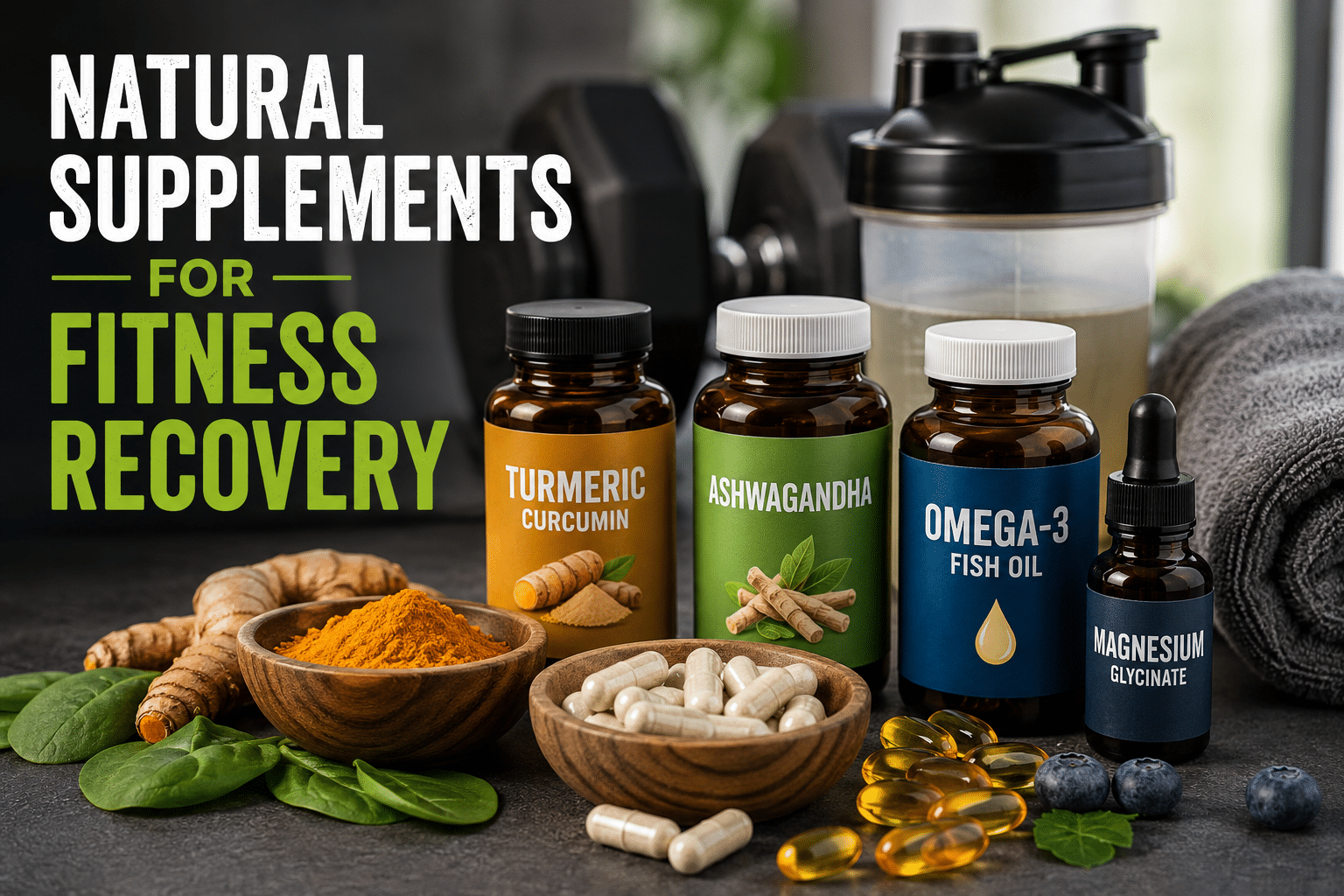
The most useful recovery supplements target specific needs: amino acids for muscle repair, creatine for repeated power output, electrolytes for hydration, magnesium for neuromuscular relaxation, collagen for connective tissue, and plant-based compounds for soreness and exercise-related stress. The key is not taking every supplement available. Among the many health supplements people see on shelves, the real goal is choosing the right natural supplement for the recovery problem you actually have.
Below is a practical, evidence-informed guide to the natural supplements most worth understanding for fitness recovery.
Protein Supplements for Muscle Repair
Protein is the foundation of muscle recovery because exercise breaks down muscle proteins, especially during resistance training, sprinting, and high-intensity workouts. To repair and rebuild, the body needs essential amino acids, particularly leucine, which helps trigger muscle protein synthesis.
Whey protein is a strong post-workout option because it digests quickly and delivers a rich supply of essential amino acids. It is especially useful after weight training, CrossFit-style sessions, or intense sports practice when muscles need fast nutritional support. Casein protein digests more slowly, making it more suitable before sleep or during long gaps between meals. Plant-based protein powders such as pea, soy, rice, or blended vegan proteins can also support recovery when they provide a complete amino acid profile.
The best timing is within a few hours after training, especially if your last meal was several hours earlier. A practical serving is usually 20–40 grams, depending on body size, workout intensity, and daily protein intake. For broader daily recovery, the International Society of Sports Nutrition notes that resistance exercise and protein intake work together to stimulate muscle protein synthesis, with many exercising individuals benefiting from about 1.4–2.0 grams of protein per kilogram of body weight per day to support training adaptations.
Choose protein powders with simple ingredient lists, clear protein amounts per serving, and third-party testing when possible. Avoid products overloaded with added sugar, artificial fillers, or vague “muscle blend” claims. People with dairy sensitivity may prefer plant protein or lactose-free whey isolate.
Creatine for Strength Recovery and Repeated Performance
Creatine is one of the most effective natural supplements for people who train with heavy weights, repeated sprints, explosive movements, or high-intensity intervals. Its main recovery benefit is helping muscles restore quick energy between hard efforts.
During short bursts of intense exercise, the body uses ATP as its immediate energy source. Creatine helps regenerate ATP, allowing muscles to perform repeated sets or efforts more effectively. This makes it especially useful for lifters, sprinters, football players, combat athletes, and anyone doing demanding resistance training. That practical use is supported by the International Society of Sports Nutrition, which describes creatine monohydrate as effective for improving high-intensity exercise capacity and supporting greater training adaptations.
Creatine monohydrate is the most reliable form. A common intake is 3–5 grams daily. Timing is flexible because creatine works by building up in the muscles over time. Taking it after a workout with a meal can be convenient, but daily consistency matters more than the exact hour.
Good creatine should contain creatine monohydrate as the main ingredient, without unnecessary stimulants or proprietary blends. People with kidney disease or serious medical conditions should speak with a healthcare professional before using it.
Omega-3 Fatty Acids for Ongoing Inflammation Balance and Joint Comfort
Omega-3 fatty acids are best suited for long-term recovery support, especially when training creates repeated joint stress, stiffness, or lingering inflammation. Unlike tart cherry, which is often used around specific hard sessions, omega-3s are more of a daily foundation for inflammation balance.
The most important omega-3s are EPA and DHA, usually found in fish oil or algae oil. These fats support cell membrane health, joint comfort, and the body’s natural inflammatory response. They may be helpful for runners, lifters, older athletes, or anyone training frequently with limited rest days. A 2024 review also reported that omega-3s have been studied as possible post-exercise recovery agents, although evidence for clear recovery and performance benefits in healthy adults is still not fully conclusive.
The best timing is with meals that contain fat, which may improve absorption and reduce fishy aftertaste. Quality matters greatly. Look for products that clearly list EPA and DHA amounts, not just “fish oil 1000 mg.” Third-party testing for purity is important because poor-quality oils may oxidize or contain contaminants.
Natural food sources include salmon, sardines, mackerel, anchovies, trout, chia seeds, flaxseeds, and walnuts. However, plant sources mainly provide ALA, which the body converts inefficiently into EPA and DHA. Vegans may prefer algae-based omega-3 supplements.
People using blood-thinning medication or preparing for surgery should be cautious with higher-dose omega-3 supplements.
Magnesium for Sleep-Related Recovery and Muscle Relaxation
Magnesium supports recovery through a different pathway than protein or creatine. It does not directly build muscle, but it helps create the internal conditions needed for recovery: relaxed muscles, stable nerve function, energy metabolism, and better sleep quality.
This supplement is especially useful for people who experience muscle tightness, poor sleep, stress, cramps, or excessive sweating. When the nervous system stays overstimulated after training, recovery can feel incomplete. Magnesium may help the body shift into a calmer state. Its role in recovery is worth noting because magnesium is involved in energy production, nerve activity, and muscle contraction, and recent research has examined its effects on muscle soreness following various physical activities.
Magnesium glycinate is often preferred for relaxation and sleep because it is gentle on digestion. Magnesium citrate may help some people, but it can loosen the bowels. Magnesium oxide is common but is not always the best choice for absorption.
The best timing is usually in the evening or after training, especially when the goal is relaxation. Natural food sources include pumpkin seeds, spinach, almonds, black beans, dark chocolate, cashews, and whole grains.
Avoid taking excessive magnesium, especially from supplements. Too much can cause digestive problems. People with kidney issues should seek medical advice before using magnesium supplements.
Tart Cherry for Short-Term Soreness After Demanding Sessions
Tart cherry is most useful when soreness is expected after a particularly difficult workout or event. Its recovery value comes from plant compounds called anthocyanins, which help support antioxidant activity and a healthy response to exercise-induced muscle stress.
This supplement is different from omega-3 because it is often used strategically around hard training blocks, races, tournaments, or heavy leg sessions. It is not necessarily a daily requirement for recovery. It is more like targeted support when the body is likely to feel sore and stiff. Research reviews suggest that tart cherry may help support recovery after exercise-induced muscle damage (EIMD), although results are not always consistent across studies.
Tart cherry may be useful after long runs, downhill running, high-volume squats, endurance races, or back-to-back training days. It is commonly taken as juice, concentrate, capsules, or powder. Juice and concentrate can be effective but may contain natural sugars, so capsules may suit people who want a lower-sugar option.
The best timing is usually before and after demanding sessions or during several days around intense training. Choose products made from Montmorency tart cherries when possible, and check serving sizes carefully.
Electrolytes for Hydration Recovery After Heavy Sweating
Electrolytes are essential when recovery is limited by fluid and mineral loss. Sweat removes more than water; it also removes sodium, chloride, potassium, and smaller amounts of magnesium and calcium. If these minerals are not replaced after long or hot workouts, the body may feel weak, dizzy, cramped, or slow to recover.
Electrolyte supplements are most helpful for endurance athletes, outdoor workers, cyclists, runners, team-sport athletes, and heavy sweaters. Sodium is especially important because it is the main electrolyte lost through sweat. Many people focus only on potassium, but sodium is often the more urgent recovery mineral after heavy sweating.
The best timing is during or after long workouts, hot-weather training, sauna-heavy routines, or sessions lasting over an hour. Choose an electrolyte product based on your sweat level. Heavy sweaters usually need more sodium, while light exercisers may only need water and a normal meal.
Natural sources include coconut water, bananas, potatoes, yogurt, oranges, broth, and salted meals. Avoid electrolyte products with unnecessary stimulants, excessive sugar, or low mineral content disguised by strong flavoring.
Collagen with Vitamin C for Tendons, Ligaments, and Joint Support
Collagen supports tissue repair in areas that do not heal as quickly as muscles. Tendons, ligaments, cartilage, and joint structures handle repeated pulling, jumping, lifting, and impact. These tissues often need more time and targeted nutrition to adapt.
Collagen provides amino acids such as glycine, proline, and hydroxyproline, which are important for connective tissue structure. Vitamin C is important because the body needs it for collagen formation. This combination may be especially useful for runners, lifters, older adults, court-sport athletes, and people doing rehab-style tendon loading. This connective-tissue focus is supported by recent reviews examining collagen supplementation, alone or with vitamin C, for tendon-related structure and performance outcomes.
Collagen should not replace complete protein because it does not provide all essential amino acids in ideal amounts. Its role is more specific: connective tissue support. Many people take collagen with vitamin C 30–60 minutes before training, mobility work, or tendon-focused exercises.
Natural sources include bone broth, chicken skin, fish skin, gelatin, citrus fruits, berries, bell peppers, and kiwi. Choose hydrolyzed collagen peptides for easier mixing and digestion.
Curcumin for Targeted Post-Workout Stiffness and Discomfort
Curcumin, the active compound in turmeric, is best used for targeted discomfort and stiffness rather than everyday recovery for every workout. It overlaps slightly with tart cherry, as both address soreness, but their best uses differ.
Tart cherry is better for short-term soreness after demanding sessions. Omega-3 is better for ongoing inflammation balance and joint comfort. Curcumin is better when post-workout stiffness or discomfort is more noticeable, and movement quality feels limited. A systematic review on curcumin and exercise-induced muscle damage found that curcumin has been studied for muscle pain, performance, muscle enzyme activity, inflammation, and oxidative stress markers in physically active people.
Curcumin may be helpful after heavy eccentric training, intense leg days, long descents, or workouts that leave joints and muscles feeling unusually stiff. Because curcumin absorbs poorly on its own, high-quality supplements often include black pepper extract or absorption-enhancing technology.
It is best taken with food. People using blood thinners, managing gallbladder problems, or taking regular medication should be careful with concentrated curcumin supplements.
How to Choose the Right Natural Supplement for Your Recovery Goal
The best supplement depends on the recovery problem, not the product’s popularity.
– For muscle repair, choose protein.
– For strength recovery and repeated performance, choose creatine.
– For heavy sweating and dehydration, choose electrolytes.
– For sleep-related recovery and muscle tension, choose magnesium.
– For tendon, ligament, and joint support, choose collagen with vitamin C.
– For short-term soreness after hard sessions, choose tart cherry.
– For targeted stiffness and discomfort, choose curcumin.
– For ongoing inflammation balance and joint comfort, choose omega-3.
Common mistakes include taking too many supplements at once, ignoring total diet quality, choosing products with hidden dosages, expecting supplements to replace sleep, and using anti-inflammatory supplements after every single workout. Recovery supplements work best when they fill a clear gap. The NIH Office of Dietary Supplements reinforces this balanced approach, cautioning that exercise supplements cannot replace a healthy diet and fluids, and that some products may help in certain situations while others may be ineffective or risky.
💪 FaithnFit Recommended Fitness Resources
Support your muscle-building, fat-loss, and fitness goals with these recommended resources:
- 🏋️ Home Gym Equipment – Build Your Training Space
- 💪 Muscle Growth Supplements – Support Recovery and Growth
- 🔥 Fat Loss Supplements – Enhance Your Nutrition Strategy
- 🏃 Fitness Gear – Train Smarter and More Comfortably
“Consistency in diet and training compounds over time just like interest in a bank account.”
Final Thoughts
Natural supplements for fitness recovery can be highly useful when they are matched to the body’s actual needs. Protein repairs muscle, creatine restores repeated power, electrolytes rebuild hydration, magnesium supports relaxation, collagen strengthens connective tissue support, omega-3 helps long-term inflammation balance, tart cherry targets short-term soreness, and curcumin supports stiffness relief.
A smart recovery plan is not about collecting supplements. It is about choosing the right tool for the right recovery challenge. When used with proper training, food, hydration, and sleep, natural supplements can help the body recover more efficiently, train more consistently, and perform with greater confidence.
🌿 Natural Daily Support for Men and Women
I like Divine Bounty supplements because they use natural ingredients instead of synthetic formulas. For people who want a cleaner option for everyday wellness support, Divine Bounty offers quality supplements designed to fit a healthy lifestyle.
Their lineup includes the popular Men’s Multivitamin, plus other supplements for men and women such as Vitamin B Complex, Digestive Enzymes, Berberine, Magnesium Citrate, Vitamin K2 + D3, and Acetyl L-Carnitine.
The Men’s Multivitamin features 24 essential vitamins and minerals plus 5 additional blends for men, all in convenient vegetarian capsules. It is also promoted as GMO free, soy free, dairy free, wheat free, and gluten free.
🛒 Shop Divine Bounty on AmazonSponsored by Terry Clark • Amazon Affiliate Partner