Estimated reading time: 5 minutes
Many bodybuilders obsess over protein while overlooking one of the most powerful tools for muscle growth: carbohydrate timing. Protein provides the building blocks for muscle repair, but carbohydrates provide the fuel that allows you to train hard, recover quickly, and create the environment needed for growth.
If your goal is to build muscle naturally, understanding carbohydrate timing can help you maximize every workout. Think of carbohydrates as gasoline for a car. Without fuel, even the most powerful engine cannot perform at its best. Likewise, your muscles cannot consistently perform at a high level without adequate glycogen stores.
The math is simple. Better workouts plus better recovery equals more opportunities for muscle growth. That is why carbohydrate timing deserves a place in every muscle-building nutrition strategy.
What Is Carbohydrate Timing?
Carbohydrate timing refers to strategically consuming carbohydrates around workouts to maximize training performance, recovery, and muscle growth.
The primary goal of carbohydrate timing is to:
- Increase workout performance
- Preserve muscle glycogen
- Improve recovery
- Support muscle protein synthesis
- Reduce fatigue
When carbohydrates are consumed at the right times, they help create an environment where muscle growth can occur more efficiently.
Why Does Carbohydrate Timing Matter for Muscle Growth?
Resistance training relies heavily on stored glycogen. Glycogen is the stored form of carbohydrates found in your muscles and liver.
When glycogen levels are high:
- Strength increases
- Training volume improves
- Recovery accelerates
- Fatigue decreases
When glycogen becomes depleted:
- Performance drops
- Recovery slows
- Muscle-building potential declines
A bodybuilder performing 15 to 20 hard sets for a muscle group can significantly reduce glycogen stores. Replenishing those stores efficiently becomes critical if muscle growth is the goal.

How Does Carbohydrate Timing Improve Workout Performance?
The best workouts usually happen when muscles are fully fueled.
Consuming carbohydrates 60 to 120 minutes before training provides readily available energy that can help increase:
- Total reps completed
- Training volume
- Strength output
- Workout intensity
A simple pre-workout meal may include:
- 1 cup cooked rice
- 6 ounces chicken breast
- Mixed vegetables
This meal provides approximately 45 grams of carbohydrates and 40 grams of protein, creating a strong foundation for training.
The formula is straightforward:
More training volume × progressive overload = greater muscle-building potential.
When Should You Eat Carbohydrates Before Training?
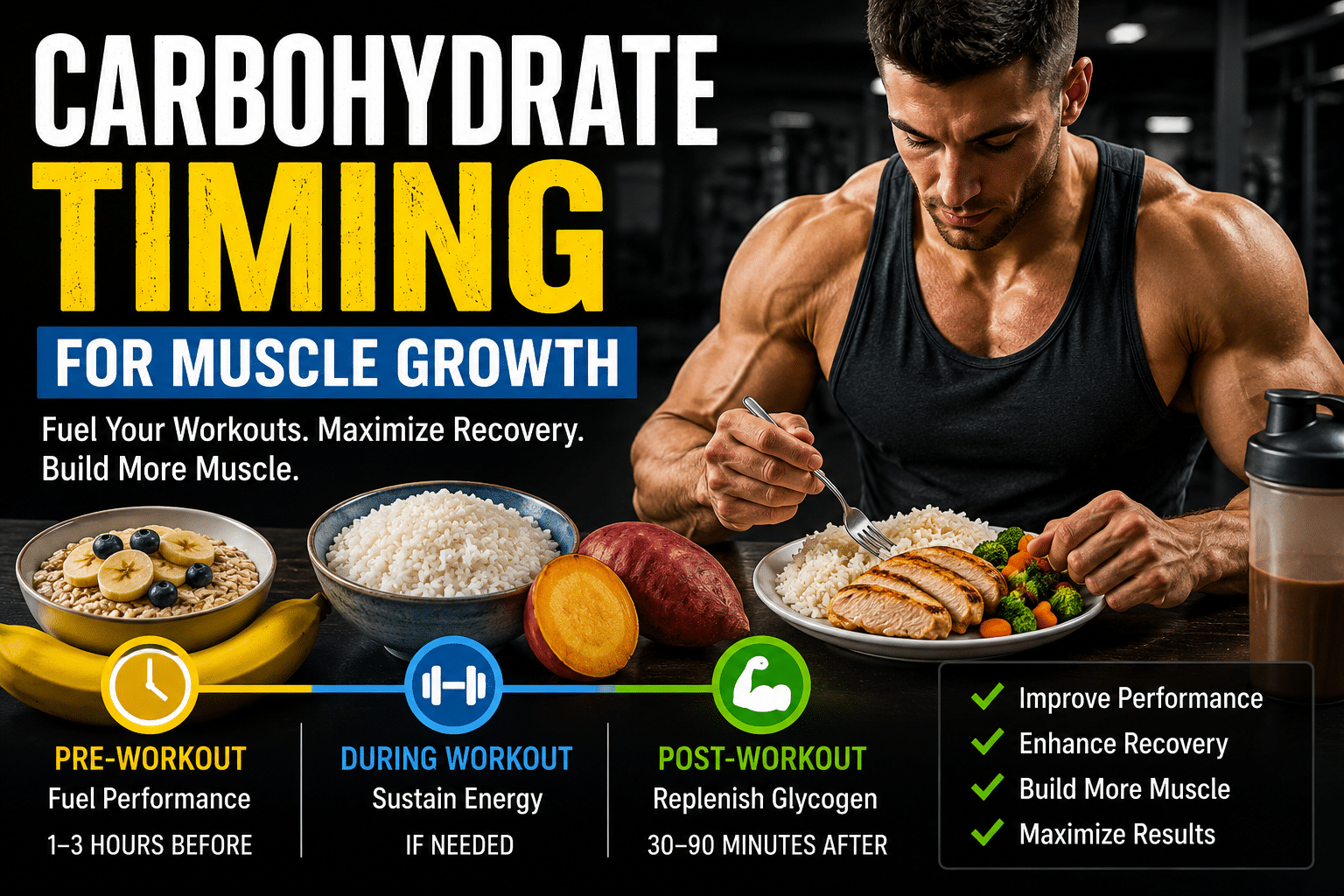
For most lifters, the ideal pre-workout window is between one and three hours before training.
General recommendations:
- Small meal: 60 minutes before training
- Moderate meal: 90 minutes before training
- Large meal: 2 to 3 hours before training
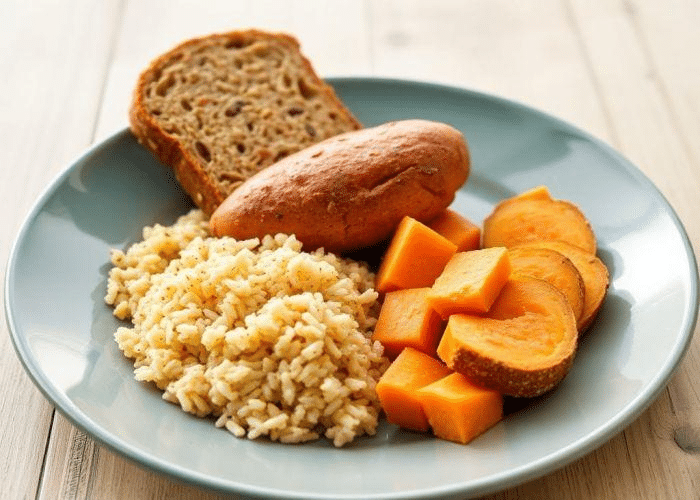
Focus on easily digestible carbohydrate sources such as:
- Rice
- Potatoes
- Oatmeal
- Fruit
- Whole-grain bread
Avoid extremely high-fat meals before workouts because they can slow digestion and reduce energy availability.
Should You Eat Carbohydrates During Your Workout?
Most recreational lifters do not need carbohydrates during training.
However, intra-workout carbohydrates may benefit individuals who:
- Train longer than 90 minutes
- Perform high-volume bodybuilding workouts
- Train multiple times per day
- Are in a calorie deficit
Sports drinks, fruit, or carbohydrate powders can help maintain energy levels during extended sessions.
How Does Post-Workout Carbohydrate Timing Support Recovery?
The period after training is one of the most effective times to consume carbohydrates.
After a workout, muscles become highly receptive to replenishing glycogen stores.
Combining carbohydrates with protein after training may:
- Improve recovery
- Restore glycogen faster
- Support muscle repair
- Prepare the body for future workouts
A quality post-workout meal might include:
- 8 ounces lean ground beef
- 300 grams baked potatoes
- Green vegetables
This meal delivers both carbohydrates and protein to support recovery.
What Are the Best Carbohydrates for Muscle Growth?
Not all carbohydrates are created equal.
Excellent muscle-building carbohydrate sources include:
- Rice
- Potatoes
- Sweet potatoes
- Oatmeal
- Fruit
- Whole-grain pasta
- Quinoa
- Beans
These foods provide energy while also delivering vitamins, minerals, and fiber that support overall health.
How Much Carbohydrate Do You Need for Muscle Growth?
The answer depends on training volume and body size.
A useful starting point:
- Light training: 2 to 3 grams per kilogram of body weight
- Moderate training: 3 to 5 grams per kilogram
- High-volume bodybuilding: 5 to 7 grams per kilogram
For a 180-pound bodybuilder (82 kilograms), that equals approximately:
- 246 to 410 grams of carbohydrates daily
These numbers should be adjusted based on recovery, performance, and physique goals.

Can Carbohydrate Timing Help During a Fat Loss Phase?
Yes.
Many bodybuilders reduce carbohydrates during fat-loss phases but strategically place them around workouts.
This approach can:
- Preserve training performance
- Support muscle retention
- Improve workout intensity
- Increase dietary adherence
The key is maintaining a calorie deficit while allocating a larger percentage of carbohydrates around training sessions.
What Is the Best Carbohydrate Timing Strategy?
For most natural bodybuilders, a practical approach looks like this:
Breakfast:
Moderate carbohydrates and protein
Pre-Workout Meal:
40 to 60 grams carbohydrates
30 to 40 grams protein
Post-Workout Meal:
50 to 80 grams carbohydrates
30 to 50 grams protein
Remaining Meals:
Distribute carbohydrates evenly based on daily calorie goals.
This strategy provides fuel when it matters most while supporting recovery throughout the day.
💪 FaithnFit Muscle Building Essentials
Support your muscle-building journey with these recommended resources:
“Consistency in nutrition and training compounds into extraordinary results.”
Key Takeaways
Carbohydrate timing is not magic, but it is one of the most effective nutritional strategies for maximizing muscle growth. Training performance drives hypertrophy, and carbohydrates help fuel that performance.
Remember the equation:
Better Fuel + Better Workouts + Better Recovery = More Muscle Growth
If you are already hitting your protein targets, managing your calorie surplus, and training hard, carbohydrate timing may be the missing piece that helps you build muscle faster and recover more effectively.
🌿 Natural Daily Support for Men and Women
I like Divine Bounty supplements because they use natural ingredients instead of synthetic formulas. For people who want a cleaner option for everyday wellness support, Divine Bounty offers quality supplements designed to fit a healthy lifestyle.
Their lineup includes the popular Men’s Multivitamin, plus other supplements for men and women such as Vitamin B Complex, Digestive Enzymes, Berberine, Magnesium Citrate, Vitamin K2 + D3, and Acetyl L-Carnitine.
The Men’s Multivitamin features 24 essential vitamins and minerals plus 5 additional blends for men, all in convenient vegetarian capsules. It is also promoted as GMO free, soy free, dairy free, wheat free, and gluten free.
🛒 Shop Divine Bounty on AmazonSponsored by Terry Clark • Amazon Affiliate Partner