The Science Behind Sleep and Muscle Recovery
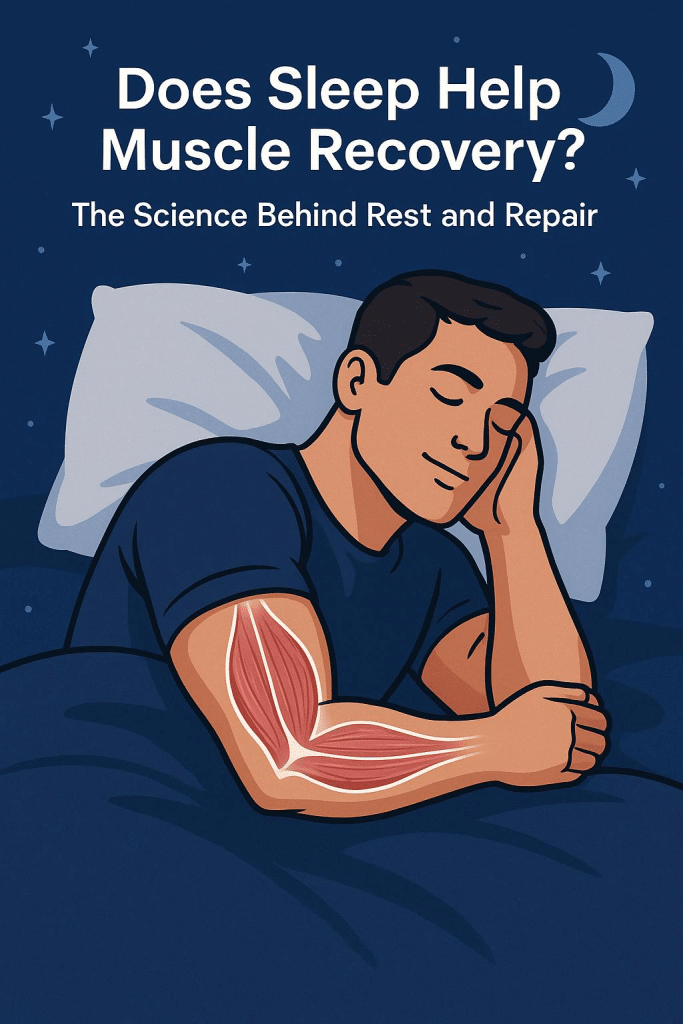
The science behind sleep and muscle recovery begins with understanding one important truth:
Muscles do not grow while you train—they grow while you sleep.
Training is the stimulus. Sleep is the rebuilding phase.
When you lift weights, perform cardio, or complete high-intensity workouts, you create microscopic muscle damage and nervous system fatigue. Your body then uses sleep to repair that damage, restore energy, and prepare you for future performance.
This process is heavily controlled by hormones, protein synthesis, and nervous system recovery.
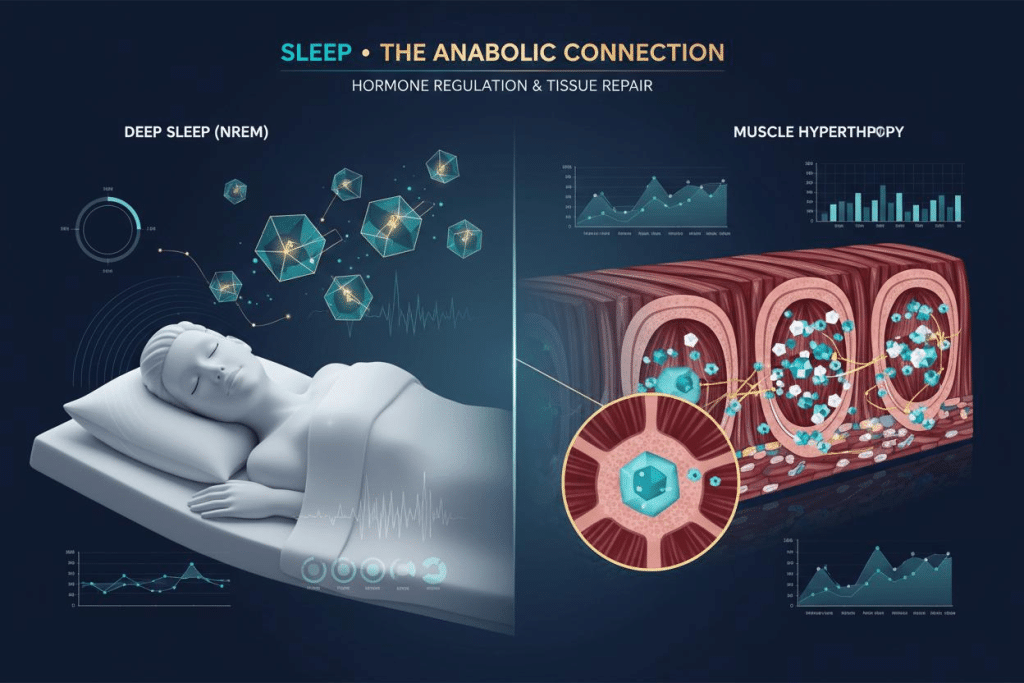
During deep sleep stages, your body increases:
- Growth hormone release
- Muscle protein synthesis
- Tissue repair
- Glycogen restoration
At the same time, sleep helps reduce:
- Cortisol levels
- Inflammation
- Physical fatigue
- Mental exhaustion
Here’s the equation:
Training + Recovery = Adaptation
Without quality sleep, the recovery side of the equation weakens.
That means even if your workouts and nutrition are excellent, poor sleep can reduce muscle growth, strength gains, fat loss, and workout performance.
Research consistently shows that sleep deprivation negatively impacts:
- Testosterone production
- Recovery speed
- Exercise performance
- Muscle-building potential
This is why athletes and bodybuilders who prioritize recovery often outperform people who only focus on training volume.
A person sleeping 7–9 quality hours per night typically experiences:
- Better muscle repair
- Improved workout performance
- Better hormonal balance
- Faster recovery between sessions
On the other hand, someone sleeping 4–6 hours may experience:
- Elevated cortisol
- Increased soreness
- Reduced recovery capacity
- Lower training intensity
The science behind sleep and muscle recovery also connects directly to the nervous system. Heavy training stresses both muscles and the central nervous system (CNS). Sleep allows the CNS to restore neurotransmitter balance, helping improve:
- Coordination
- Strength output
- Reaction time
- Exercise performance
This explains why poor sleep often causes workouts to feel heavier and less productive even when motivation is high.
In many cases, what people think is overtraining is actually under-recovery.
The body simply cannot maximize muscle growth without sufficient sleep quality and duration.
Research-backed recovery strategies like consistent sleep schedules, reduced screen exposure before bed, and proper nighttime nutrition can significantly improve recovery outcomes and support long-term muscle development.
Optimal Sleep Practices for Muscle Growth


Optimal sleep practices for muscle growth are not just about getting more sleep—they are about improving the quality, consistency, and recovery efficiency of sleep.
Many people train intensely but sabotage recovery through poor nighttime habits. The result is slower muscle growth, increased fatigue, elevated cortisol, and reduced workout performance.
The body follows rhythms and patterns. When sleep patterns become inconsistent, recovery quality declines.
The first step is creating a consistent sleep schedule.
Going to bed and waking up at the same time each day helps regulate circadian rhythms, which improves hormone production and sleep quality. Consistency helps the body predict recovery windows, making deep sleep stages more efficient.
The second step is improving the sleep environment.
A muscle-building sleep environment should include:
- A cool room temperature
- Minimal noise
- Low light exposure
- Comfortable bedding
Darkness is especially important because it supports melatonin production, which helps regulate sleep cycles and recovery processes.
Another major factor is reducing blue light exposure before bed.
Phones, tablets, and televisions stimulate the brain and suppress melatonin production. This delays sleep onset and reduces sleep quality. Limiting screen exposure 30–60 minutes before bedtime can significantly improve deep sleep duration.
Nutrition also plays a role in muscle recovery during sleep.
Consuming adequate protein throughout the day supports muscle protein synthesis overnight. Many athletes benefit from a protein-rich evening meal because amino acids remain available during sleep to support tissue repair and recovery.
Hydration matters as well.
Dehydration can negatively affect sleep quality, recovery, and muscle function. However, excessive fluid intake immediately before bed may disrupt sleep through frequent waking.
Caffeine management is another overlooked factor.
Caffeine can remain active in the body for several hours. Consuming stimulants too late in the day may reduce sleep depth and recovery quality. For many people, limiting caffeine intake in the afternoon improves nighttime recovery significantly.
Stress management is equally important.
High stress elevates cortisol levels, which can interfere with both sleep quality and muscle recovery. Relaxation strategies such as walking, stretching, breathing exercises, prayer, journaling, or meditation can help reduce nervous system stress before bedtime.
Exercise timing also influences recovery.
For some individuals, extremely intense late-night workouts increase alertness and make it harder to fall asleep. Earlier training sessions often improve recovery and sleep efficiency.
The science behind optimal sleep practices for muscle growth ultimately comes down to improving recovery efficiency. Better sleep helps support:
- Growth hormone release
- Testosterone production
- Muscle protein synthesis
- Nervous system recovery
- Glycogen replenishment
Poor sleep, on the other hand, increases the likelihood of:
- Elevated cortisol
- Slower recovery
- Reduced training intensity
- Increased cravings and hunger
Sleep is not separate from fitness—it is one of the primary drivers of fitness progress. People who consistently sleep well often recover faster, perform better in workouts, and build muscle more efficiently than those who neglect recovery habits.
Common Myths About Sleep and Muscle Recovery


There are many misconceptions surrounding sleep and muscle recovery. These myths often cause people to underestimate how important recovery truly is for muscle growth, fat loss, performance, and long-term health.
Understanding the truth behind these myths can help improve training results and recovery efficiency.
Myth #1: Muscle Is Built During Workouts
One of the biggest misunderstandings in fitness is believing muscle growth happens during training.
Workouts create the stimulus for growth through muscle tension and microscopic tissue damage, but the actual rebuilding process happens during recovery—especially during sleep.
During deep sleep, the body increases:
- Growth hormone production
- Muscle protein synthesis
- Tissue repair processes
Without adequate sleep, recovery becomes incomplete, limiting muscle growth even when training intensity is high.
The better equation is:
Training provides the signal. Sleep provides the adaptation.
Myth #2: More Sleep Is Always Better
While insufficient sleep hurts recovery, more sleep is not automatically better.
Sleep quality matters just as much as quantity.
A person sleeping 9 hours with poor sleep quality may recover worse than someone consistently getting 7.5 hours of uninterrupted deep sleep.
The goal is:
- Consistent sleep timing
- High sleep efficiency
- Sufficient deep sleep stages
Most adults recover best with approximately 7–9 quality hours per night.
Myth #3: You Can “Catch Up” on Sleep Completely
Many people believe sleeping extra on weekends fully reverses a week of poor sleep habits.
While extra sleep may help reduce fatigue temporarily, chronic sleep deprivation still negatively affects:
- Hormone balance
- Recovery efficiency
- Insulin sensitivity
- Workout performance
The body responds best to consistency rather than cycles of sleep deprivation followed by oversleeping.
Consistent recovery habits produce better long-term muscle growth results.
Myth #4: Harder Workouts Can Replace Poor Recovery
Some people attempt to overcome poor recovery by increasing workout intensity or volume.
This usually backfires.
Without proper sleep:
- Cortisol levels rise
- Recovery capacity decreases
- Muscle breakdown increases
- Performance declines
More training does not fix under-recovery.
In many cases, excessive training combined with poor sleep creates a cycle of fatigue and stalled progress.
Myth #5: Sleep Only Matters for Energy Levels
Sleep affects much more than daily energy.
Poor sleep directly impacts:
- Testosterone production
- Growth hormone release
- Muscle protein synthesis
- Appetite regulation
- Nervous system recovery
This explains why poor sleep can increase cravings, reduce workout quality, and slow fat loss or muscle-building progress.
Sleep is a performance tool—not just a comfort habit.
Myth #6: Older Adults Need Less Sleep for Recovery
A common myth is that older adults require less sleep.
In reality, older adults often experience reduced sleep quality and slower recovery capacity, making quality sleep even more important for maintaining muscle mass and performance.
The difference is not necessarily needing less sleep, but often struggling to achieve enough deep restorative sleep.
This makes recovery-focused habits increasingly important with age.
Myth #7: Supplements Can Replace Sleep
Recovery supplements may support recovery, but they cannot replace sleep itself.
No supplement can fully replicate:
- Deep sleep recovery
- Hormonal restoration
- Nervous system repair
- Natural muscle rebuilding processes
Supplements should support recovery habits—not replace them.
The science behind sleep and muscle recovery consistently shows that sleep is one of the most powerful variables influencing fitness progress. Training creates the challenge, but sleep determines how effectively the body adapts to that challenge.
People who prioritize sleep often experience:
- Better recovery
- Improved performance
- More muscle growth
- Better fat loss results
- Reduced injury risk
Recovery is not weakness or laziness—it is one of the most important parts of the muscle-building process.
Integrating Sleep Into Your Recovery Strategy
🌿 Natural Daily Support for Men and Women
I like Divine Bounty supplements because they use natural ingredients instead of synthetic formulas. For people who want a cleaner option for everyday wellness support, Divine Bounty offers quality supplements designed to fit a healthy lifestyle.
Their lineup includes the popular Men’s Multivitamin, plus other supplements for men and women such as Vitamin B Complex, Digestive Enzymes, Berberine, Magnesium Citrate, Vitamin K2 + D3, and Acetyl L-Carnitine.
The Men’s Multivitamin features 24 essential vitamins and minerals plus 5 additional blends for men, all in convenient vegetarian capsules. It is also promoted as GMO free, soy free, dairy free, wheat free, and gluten free.
🛒 Shop Divine Bounty on AmazonSponsored by Terry Clark • Amazon Affiliate Partner