Estimated reading time: 6 minutes
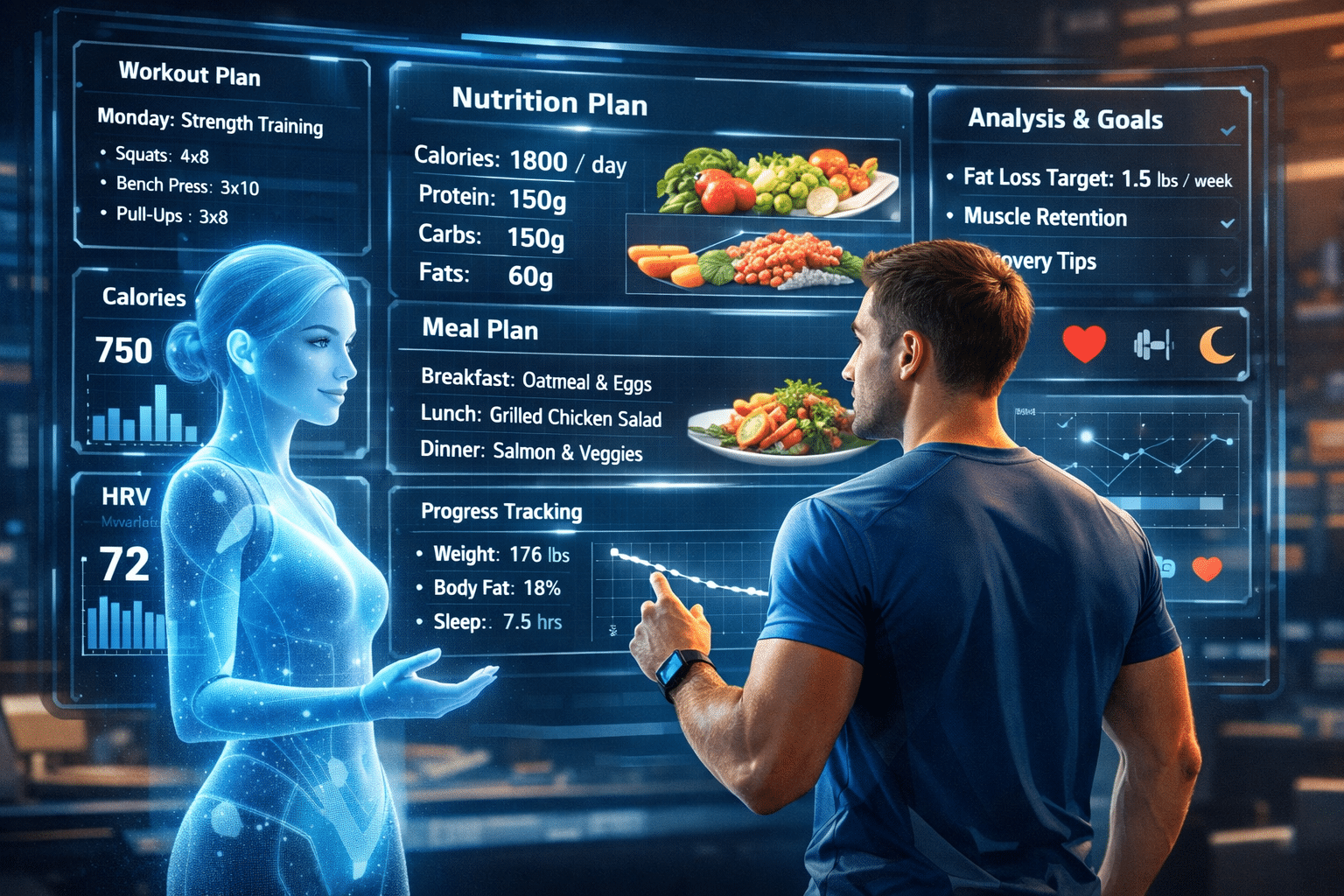
Artificial intelligence is rapidly becoming one of the most powerful tools available for improving personal health and fitness. With prompt engineering for health and fitness, the quality of results people get from AI can be greatly improved. But the results people get from AI vary dramatically. Some individuals receive generic advice that barely moves the needle, while others generate detailed meal plans, training programs, data analysis, and behavior strategies that accelerate their progress.
The difference is rarely the AI itself.
The difference is prompt engineering.
Prompt engineering is the skill of structuring questions or instructions so that an AI system produces the most useful, accurate, and actionable responses possible. In the world of health and fitness—where progress depends on data, consistency, and strategy—good prompts can transform AI into a powerful digital coach.
Instead of simply asking for a diet plan or workout routine, strategic prompts can generate:
- Personalized training programs
- Nutritional optimization
- Performance analytics
- Behavioral coaching
- Long-term habit systems
For individuals tracking progress the way many serious athletes and researchers do—recording weight, calories, sleep, HRV, workouts, and hunger levels—AI prompts can even help analyze data trends and predict future results.
This article explores five of the most powerful prompt engineering strategies you can use to dramatically improve the quality of health and fitness guidance generated by AI.
1. The Context-Rich Prompt
The most common mistake people make when using AI is asking questions with almost no context.
For example:
“Give me a workout plan.”
That prompt forces the AI to guess everything—your age, fitness level, equipment, goals, schedule, and injuries.
A context-rich prompt, however, provides the background necessary to generate meaningful advice.
Example of a weak prompt
“Create a diet for weight loss.”
Example of a powerful context prompt
“Create a 30-day weight loss plan for a 56-year-old male who trains 5 days per week using compound lifts and bodyweight exercises. Target a daily calorie deficit of 500–700 calories while maintaining muscle mass. Include protein targets, hydration goals, and recovery strategies.”
Notice what this does:
It transforms the AI from a generic advice generator into something closer to a personalized strategist.
The more relevant information you include, the better the output becomes.
Useful context can include:
- Age
- Weight and body composition
- Fitness level
- Available equipment
- Diet preferences
- Sleep habits
- Current activity level
- Medical considerations
- Time available for workouts
The goal is to eliminate guesswork.
When AI understands the environment surrounding the goal, it can produce more intelligent recommendations.
2. The Structured Data Prompt
Serious health optimization requires data.
Many people track:
- body weight
- calorie intake
- workouts
- sleep duration
- heart rate variability (HRV)
- hunger levels
- glucose or ketone readings
A powerful prompt engineering strategy is to feed structured data into AI and ask it to analyze patterns.
For example:
“Here is my weekly dataset including calories, protein intake, sleep hours, and weight changes. Identify trends and explain what factors appear to influence fat loss most strongly.”
This turns AI into a statistical assistant.
With structured prompts, AI can help identify:
- correlations between sleep and fat loss
- calorie intake trends
- workout performance patterns
- plateau causes
- recovery indicators
For example, AI might identify patterns like:
- weight loss accelerating after higher protein days
- poor sleep correlating with increased hunger
- reduced performance following low carbohydrate intake
The key is formatting the data clearly.
A simple table format works well.
Example:
| Day | Calories | Protein | Sleep | Weight |
|---|---|---|---|---|
| Mon | 1800 | 150g | 7h | 180 |
| Tue | 1700 | 160g | 6h | 179 |
| Wed | 1900 | 145g | 8h | 178 |
The more consistent the dataset, the more powerful the analysis becomes.
This approach is particularly valuable for personal research experiments, such as a 30-day fat loss study or metabolic tracking project.
3. The Role-Based Prompt
One of the most powerful techniques in prompt engineering is assigning a professional role to the AI.
Instead of simply asking for advice, you instruct the AI to respond as a specialist.
For example:
“Act as a sports nutritionist and design a muscle-building meal plan for someone training with heavy compound lifts five days per week.”
Or:
“Act as a strength and conditioning coach analyzing this workout log.”
This technique works because it frames the response in the mindset of a professional discipline.
Possible roles include:
- sports nutritionist
- strength coach
- metabolic researcher
- physical therapist
- endocrinologist
- behavioral psychologist
- longevity scientist
Each role produces different types of insights.
A behavioral psychologist might focus on habits and motivation.
A strength coach will prioritize progressive overload.
A nutritionist will emphasize macros and recovery.
Using role prompts allows users to simulate multiple expert perspectives.
For example, you could ask AI to analyze the same dataset from three roles:
- nutritionist
- exercise physiologist
- behavioral coach
This multi-angle analysis can reveal insights that might otherwise be missed.
4. The Iterative Refinement Prompt
Most people treat AI interactions like a single question.
But the most powerful way to use AI is iteration.
This means asking follow-up prompts that refine, improve, and expand the results.
Example sequence:
Prompt 1
“Create a beginner strength training program.”
Prompt 2
“Modify the program to emphasize fat loss while maintaining muscle.”
Prompt 3
“Optimize the program for someone training in a home gym with dumbbells and a power tower.”
Prompt 4
“Add progressive overload guidelines and recovery days.”
Each step makes the output more customized and refined.
The process resembles working with a real coach.
The best results usually come after several iterations where you:
- clarify goals
- correct assumptions
- request improvements
- ask for deeper analysis
Iteration turns AI from a simple answer engine into a collaborative thinking partner.
5. The Outcome-Oriented Prompt
One of the most powerful prompt engineering methods is focusing on specific outcomes rather than general advice.
Instead of asking:
“How do I get healthier?”
You ask:
“What strategies produce the fastest fat loss while preserving muscle mass during a 30-day cutting phase?”
Outcome-based prompts force the AI to think strategically.
Examples include:
- “What habits produce the greatest improvement in metabolic health within 12 weeks?”
- “Design a training plan that maximizes strength gains while minimizing joint stress.”
- “Identify the highest-impact lifestyle changes for improving sleep quality.”
The clearer the desired outcome, the more actionable the response becomes.
In health and fitness, measurable outcomes might include:
- fat loss
- muscle gain
- blood glucose control
- improved sleep
- increased endurance
- reduced inflammation
Outcome-based prompts are especially useful when experimenting with personal health systems.
They encourage AI to focus on results rather than general information.
Why Prompt Engineering Matters for Health Optimization
Health improvement is a complex system involving:
- biology
- behavior
- environment
- psychology
- lifestyle
AI can process enormous amounts of information, but without the right prompt structure, it will default to broad advice.
Effective prompt engineering allows individuals to:
- personalize recommendations
- analyze personal data
- simulate expert consultation
- refine strategies over time
- accelerate learning and experimentation
In many ways, prompt engineering is becoming a new literacy skill for the digital age.
Just as learning how to search effectively on Google improved information access, learning how to communicate effectively with AI will improve decision-making.
For people deeply invested in health, fitness, and performance, this skill can become a powerful advantage.
Final Thoughts
The future of health and fitness will increasingly involve human intelligence working alongside artificial intelligence.
However, the effectiveness of that partnership depends largely on how well individuals communicate with the technology.
The five strategies discussed in this article—context-rich prompts, structured data prompts, role-based prompts, iterative refinement, and outcome-oriented prompts—can dramatically improve the quality of AI-generated guidance.
When used effectively, prompt engineering transforms AI from a simple question-and-answer tool into something far more powerful:
A personalized health optimization assistant.
Instead of replacing human judgment, it amplifies it—allowing individuals to analyze their habits, test strategies, and make better decisions about their bodies, their nutrition, and their long-term well-being.
Read Next…
- 5 Best AI Fitness Prompts to Reach Goals Fast
- Using AI for Fitness: How Artificial Intelligence Is Revolutionizing Workouts
- AI for Health: How Artificial Intelligence Is Transforming Medicine and Personal Wellness
- Latest Trends in Fitness Technology
- Top Fitness Technology Trends Shaping 2025
🌿 Natural Daily Support for Men and Women
I like Divine Bounty supplements because they use natural ingredients instead of synthetic formulas. For people who want a cleaner option for everyday wellness support, Divine Bounty offers quality supplements designed to fit a healthy lifestyle.
Their lineup includes the popular Men’s Multivitamin, plus other supplements for men and women such as Vitamin B Complex, Digestive Enzymes, Berberine, Magnesium Citrate, Vitamin K2 + D3, and Acetyl L-Carnitine.
The Men’s Multivitamin features 24 essential vitamins and minerals plus 5 additional blends for men, all in convenient vegetarian capsules. It is also promoted as GMO free, soy free, dairy free, wheat free, and gluten free.
🛒 Shop Divine Bounty on AmazonSponsored by Terry Clark • Amazon Affiliate Partner