Estimated reading time: 7 minutes
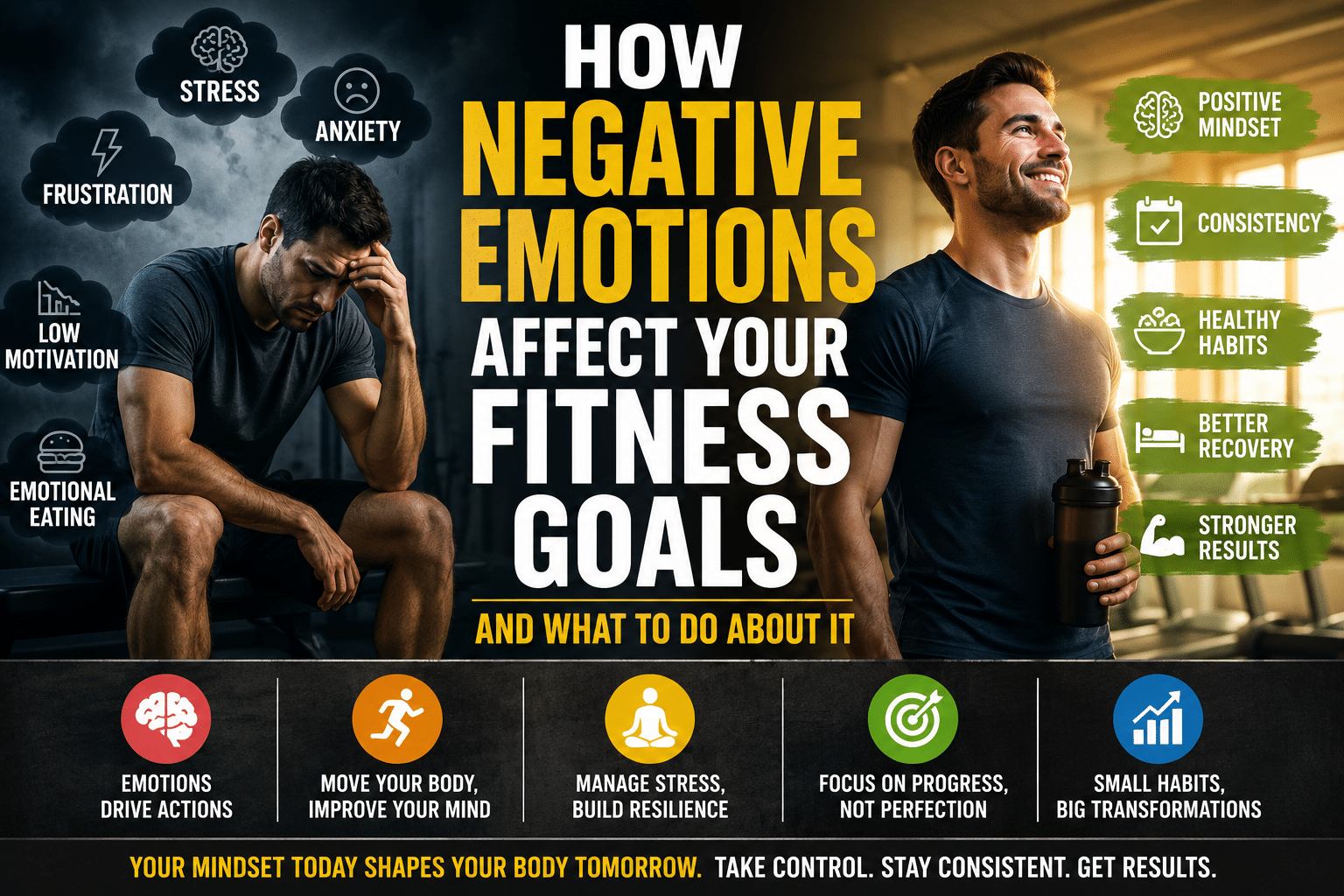
Your body follows your mind more than most people realize. Negative emotions can quietly sabotage fitness goals by influencing sleep, appetite, energy levels, motivation, hormones, and recovery. Many people blame their genetics, workout plan, or diet when the real issue starts in the mind.
Stress, anger, anxiety, loneliness, guilt, frustration, and depression all create biological reactions that directly impact fat loss, muscle growth, and physical performance. The body cannot separate emotional stress from physical stress. To your nervous system, emotional pain is still stress.
This is why negative emotions fitness struggles are so common. Emotional health and physical health are deeply connected.
Think about the equation:
Chronic stress+Poor recovery=Reduced fitness results
The good news is that emotional fitness can improve just like physical fitness. With the right habits, you can reduce the damage negative emotions cause and rebuild momentum.


6
How Do Negative Emotions Affect Fitness Goals?
Negative emotions influence behavior and biology simultaneously. When stress levels rise, the body releases cortisol and adrenaline. Short bursts of stress can improve performance temporarily, but chronic stress creates problems.
High stress over time may lead to:
- Increased fat storage
- Emotional eating
- Poor sleep quality
- Lower testosterone
- Reduced muscle recovery
- Low workout motivation
- Increased inflammation
- Poor decision-making
Many people unknowingly enter a cycle where emotional stress lowers consistency. Less consistency leads to fewer results, which creates even more frustration.
The math becomes destructive:
- More stress = worse recovery
- Worse recovery = lower performance
- Lower performance = less motivation
- Less motivation = worse habits
Without intervention, the cycle continues.
Why Does Emotional Eating Hurt Fitness Progress?
Food is often used to regulate emotions instead of hunger. Stress eating usually involves high-calorie foods that temporarily increase dopamine and comfort.
The problem is emotional eating often ignores calorie awareness.
A surplus of only 300 extra calories daily can lead to significant fat gain over time.
300 calories/day×30=9000 calories/month
That amount can easily equal more than two pounds of stored body fat monthly.
Many people do not fail because of one large mistake. They fail because of repeated emotional habits.
Can Negative Emotions Reduce Muscle Growth?
Yes. Chronic stress can reduce recovery and performance inside the gym.
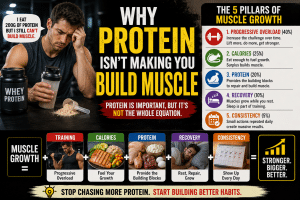
Muscle growth depends on several factors:
- Progressive overload
- Adequate protein
- Sleep quality
- Recovery
- Hormonal support
- Workout intensity
Negative emotions can disrupt nearly all of them.
When stress increases:
- Sleep quality declines
- Recovery slows
- Motivation decreases
- Appetite regulation changes
- Training intensity drops
Even if the workout program is perfect, emotional stress can reduce results.
The body grows during recovery, not during workouts alone.
Why Does Anxiety Affect Workout Consistency?
Consistency is the most important factor in long-term fitness success. Anxiety often makes routines feel overwhelming.
Some people skip workouts because they feel mentally exhausted before they even begin. Others become perfectionists and quit after missing one workout or eating one unhealthy meal.
Fitness is not about perfection. It is about averages over time.
A person who follows a program at 80% consistency for a year usually gets better results than someone who quits repeatedly while chasing perfection.
What Happens to Hormones During Emotional Stress?
The nervous system strongly affects hormones tied to fitness and sexual health.
High cortisol may contribute to:
- Reduced testosterone
- Increased belly fat
- Poor insulin sensitivity
- Lower energy levels
- Increased cravings
The body prioritizes survival during chronic stress. Muscle growth and fat loss become secondary.
This is why stress management is not optional for long-term health.
How Can Exercise Improve Negative Emotions?
Exercise itself is one of the best tools for emotional regulation.
Resistance training, walking, cardio, and sports all help release endorphins and reduce stress hormones.
Exercise improves:
- Mood
- Sleep quality
- Confidence
- Energy
- Stress resilience
- Emotional stability
Movement changes brain chemistry.
Even simple daily walking can help lower anxiety and improve emotional health.


What Should You Do When Negative Emotions Hurt Motivation?
The solution is not relying on motivation alone. Motivation changes daily. Systems and habits create results.
Here are practical strategies to regain control.
Focus on Small Wins
Many people become overwhelmed because they focus only on the final goal.
Instead:
- Drink more water today
- Walk 20 minutes
- Eat one healthy meal
- Complete one workout
Momentum matters.
Improve Sleep First
Poor sleep increases stress hormones, cravings, and emotional instability.
Aim for:
- 7–9 hours of sleep
- Consistent bedtime
- Reduced screen exposure before bed
Better sleep improves emotional control dramatically.
Use Exercise as Therapy
Training should not always feel like punishment. Sometimes movement is medicine.
Walking, lifting weights, yoga, or sports can improve emotional balance naturally.
Avoid All-or-Nothing Thinking
Missing one workout does not ruin progress.
One unhealthy meal does not destroy a diet.
Long-term averages matter more than isolated mistakes.
Build Emotional Awareness
Learn your emotional triggers.
Ask yourself:
- Am I hungry or stressed?
- Am I tired or emotional?
- Am I avoiding discomfort?
Awareness creates control.
Why Does Self-Talk Matter in Fitness?
Negative self-talk affects behavior more than people realize.
Statements like:
- “I always fail.”
- “I’ll never lose weight.”
- “I’m too far behind.”
can increase hopelessness and reduce effort.
Your internal language shapes your actions.
Replace destructive thinking with measurable goals and realistic expectations.
Fitness is a process, not an instant transformation.
Can Relationships Affect Fitness Goals?
Absolutely. Emotional environments influence behavior.
Supportive relationships often improve:
- Accountability
- Motivation
- Emotional stability
- Stress management
Toxic relationships can increase emotional eating, poor sleep, anxiety, and inconsistent habits.
Your environment matters.
Key Takeaways About Negative Emotions Fitness
Negative emotions fitness struggles are more common than most people realize. Stress, anxiety, frustration, and emotional exhaustion can directly affect fat loss, muscle growth, consistency, and recovery.
The body and mind work together.
Remember this formula:
Better emotional health=Better consistency+Better recovery+Better results
You do not need perfect emotions to succeed. You need healthy systems that help you move forward even during difficult seasons.
Small consistent habits often beat extreme motivation every time.
Affiliate Recommendations
💪 Faith & Fit Wellness Toolkit
Support your mental and physical performance with these fitness essentials:
“Strong minds build strong bodies through consistent habits.”
Internal Link Suggestions
- The Interconnectedness of Mental and Emotional Well-Being
- Sleep: The Missing Piece of Fitness Success
External Sources
- American Psychological Association – Stress Effects on the Body
- Harvard Health – Exercise and Mental Health
🌿 Natural Daily Support for Men and Women
I like Divine Bounty supplements because they use natural ingredients instead of synthetic formulas. For people who want a cleaner option for everyday wellness support, Divine Bounty offers quality supplements designed to fit a healthy lifestyle.
Their lineup includes the popular Men’s Multivitamin, plus other supplements for men and women such as Vitamin B Complex, Digestive Enzymes, Berberine, Magnesium Citrate, Vitamin K2 + D3, and Acetyl L-Carnitine.
The Men’s Multivitamin features 24 essential vitamins and minerals plus 5 additional blends for men, all in convenient vegetarian capsules. It is also promoted as GMO free, soy free, dairy free, wheat free, and gluten free.
🛒 Shop Divine Bounty on AmazonSponsored by Terry Clark • Amazon Affiliate Partner