Estimated reading time: 6 minutes
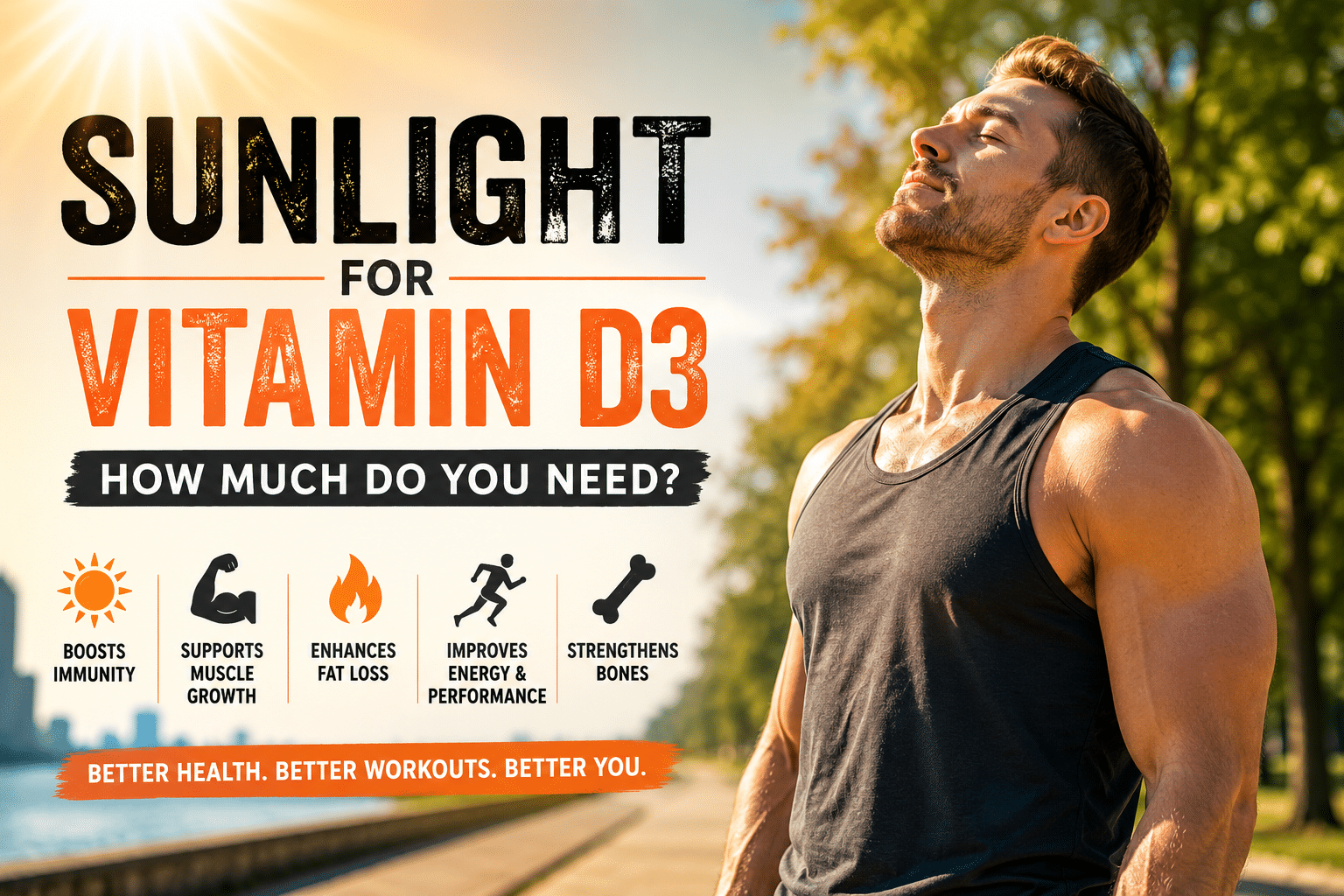
Most people think sunlight is just about getting a tan or enjoying warm weather. However, sunlight is one of the most powerful natural tools for improving health, boosting fitness performance, supporting muscle growth, and enhancing recovery. The body uses ultraviolet B (UVB) rays from sunlight to create vitamin D3, a hormone-like vitamin that influences nearly every system in the body.
For fitness enthusiasts, vitamin D3 matters because it directly affects muscle strength, testosterone production, recovery, immunity, sleep quality, and even fat loss. When vitamin D3 levels drop, energy drops with it. Workouts feel harder, recovery slows down, and motivation often decreases.
The real question is: how much sunlight for vitamin D is enough to optimize health and fitness results?
Why Is Sunlight for Vitamin D So Important?
Vitamin D3 is produced when UVB rays hit the skin. Cholesterol compounds in the skin convert sunlight into vitamin D3, which is later activated by the liver and kidneys.
Think of vitamin D3 like a fitness multiplier.
If training and nutrition are the foundation, vitamin D3 helps the body use those inputs more effectively. A person consuming enough protein and training hard may still struggle with recovery or muscle growth if vitamin D levels are too low.
Research shows vitamin D supports:
- Muscle protein synthesis
- Testosterone production
- Bone density
- Immune function
- Mood and motivation
- Sleep quality
- Insulin sensitivity
Mathematically, better recovery plus better hormone function equals better workouts.
Better workouts + consistency + recovery = greater muscle growth and fat loss over time.
How Much Sunlight for Vitamin D Do You Need?
The amount of sunlight needed depends on several variables:
- Skin tone
- Geographic location
- Time of year
- Amount of exposed skin
- Time of day
- Age
In general, most people need approximately:
- 10–30 minutes of midday sunlight
- 3–5 times weekly
- With arms and legs exposed
Midday sunlight between 10 a.m. and 2 p.m. provides the strongest UVB exposure.
People with darker skin tones may require more time because melanin reduces UVB absorption. Someone with very fair skin may produce adequate vitamin D in 10 minutes, while darker skin may require 30–60 minutes under similar conditions.
Here is the simple equation:
More skin exposed + stronger UVB rays = faster vitamin D production
Winter seasons complicate things further. In northern states, UVB exposure may become too weak during winter months to produce meaningful vitamin D3.
That is one reason vitamin D deficiency becomes more common during colder months.
Can You Build Muscle Better With Vitamin D3?
Yes, vitamin D3 strongly supports muscle function and strength.
Muscle cells contain vitamin D receptors. When vitamin D levels are optimal, muscle contractions become more efficient, recovery improves, and strength output often increases.
Low vitamin D levels are associated with:
- Lower testosterone
- Increased fatigue
- Reduced strength
- Poor recovery
- Increased injury risk
For bodybuilders and athletes, recovery is math.
If you recover faster, you can train harder and more frequently.
That creates more weekly training volume.
More quality volume + adequate calories + protein = increased hypertrophy.
Vitamin D3 may also improve neuromuscular coordination, helping athletes generate more power during compound lifts like squats, deadlifts, and presses.
Does Sunlight for Vitamin D Help Fat Loss?
Vitamin D3 may indirectly support fat loss in several ways.
First, low vitamin D levels are associated with obesity and insulin resistance. Better insulin sensitivity helps nutrients move toward muscle tissue instead of fat storage.
Second, vitamin D may improve mood and energy. When people feel energized, they naturally move more throughout the day.
That increase in NEAT (non-exercise activity thermogenesis) burns additional calories.
Here is the math:
Extra 200 calories burned daily through walking and movement x 30 days = 6,000 additional calories burned monthly.
That equals nearly two pounds of fat loss potential over time.
Sunlight exposure may also help regulate circadian rhythms, improving sleep quality. Better sleep improves appetite control, recovery, and workout performance.
What Happens If You Don’t Get Enough Vitamin D?
Vitamin D deficiency is extremely common, especially among people who:
- Work indoors
- Live in northern climates
- Wear excessive sun protection constantly
- Have darker skin tones
- Spend little time outdoors
Symptoms may include:
- Fatigue
- Low mood
- Muscle weakness
- Frequent illness
- Poor recovery
- Bone pain
- Low motivation
For athletes, deficiency can feel like constantly training with the emergency brake engaged.
Progress slows despite effort.
Is Supplementation Necessary?
Sometimes.
Sunlight should be the primary source whenever possible, but supplementation may help during winter or for individuals with low blood levels.
Most adults benefit from discussing blood testing with a healthcare provider to measure vitamin D levels accurately.
Generally, many active adults supplement with:
- 1,000–4,000 IU daily
However, needs vary significantly based on individual health, sun exposure, and deficiency status.
Food sources can help but usually are not enough alone.
Good dietary sources include:
- Salmon
- Egg yolks
- Sardines
- Fortified dairy
- Mushrooms exposed to UV light
What Is the Best Time for Sunlight for Vitamin D?
Midday sunlight is most efficient because UVB rays are strongest.
Morning sunlight still provides benefits for circadian rhythm and mental health, but midday exposure creates more vitamin D3.
A practical strategy is:
- 10–20 minutes midday exposure
- Combine it with walking
- Train outdoors when possible
This creates multiple health benefits simultaneously:
- Vitamin D production
- Increased NEAT
- Stress reduction
- Improved mood
- Additional calorie burn
That is efficient fitness mathematics.
Can Too Much Sunlight Be Harmful?
Yes.
Balance matters.
Excessive sun exposure increases skin cancer risk and accelerates skin aging.
The goal is controlled exposure without burning.
A good rule:
- Get enough sunlight to lightly warm the skin
- Avoid prolonged exposure that causes redness or peeling
More is not always better.
How Does Vitamin D Improve Overall Health?
Vitamin D3 impacts nearly every major system in the body.
Benefits may include:
- Stronger bones
- Improved immune function
- Better hormone production
- Reduced inflammation
- Enhanced mental health
- Better cardiovascular support
For fitness-minded individuals, this means improved consistency.
And consistency is what ultimately transforms physiques.
The formula is simple:
Consistency x Time x Recovery = Results
Vitamin D3 helps improve the recovery side of the equation.
Key Takeaways About Sunlight for Vitamin D
- Most people need 10–30 minutes of midday sunlight several times weekly
- Darker skin tones typically require longer exposure
- Vitamin D3 supports muscle growth, recovery, hormones, and fat loss
- Sunlight may improve sleep, mood, and energy levels
- Deficiency can reduce workout performance and recovery
- Safe, moderate sunlight exposure is ideal
- Supplements may help during winter or low sun exposure periods
💪 Fitness & Recovery Essentials
Support your muscle growth, fat loss, and recovery goals with these fitness essentials:
“Consistency with health habits compounds just like interest in a bank account.”
Frequently Asked Questions About Sunlight for Vitamin D
Can sunscreen block vitamin D production?
Yes. Sunscreen can significantly reduce UVB absorption, which lowers vitamin D production. Short periods of controlled exposure before applying sunscreen may help.
Is sunlight through a window enough?
No. Glass blocks most UVB rays needed for vitamin D synthesis.
Can cloudy weather reduce vitamin D production?
Yes. Clouds reduce UVB intensity, making vitamin D production less efficient.
Is vitamin D important for older adults?
Absolutely. Vitamin D helps preserve bone density, muscle strength, balance, and overall mobility as people age.
External Resources
- National Institutes of Health Vitamin D Fact Sheet
- Harvard T.H. Chan School of Public Health on Vitamin D
This topic fills a useful content gap on FaithnFit by connecting sunlight exposure directly to muscle growth, fat loss, recovery, and fitness performance without duplicating existing articles in the sitemap.
🌿 Natural Daily Support for Men and Women
I like Divine Bounty supplements because they use natural ingredients instead of synthetic formulas. For people who want a cleaner option for everyday wellness support, Divine Bounty offers quality supplements designed to fit a healthy lifestyle.
Their lineup includes the popular Men’s Multivitamin, plus other supplements for men and women such as Vitamin B Complex, Digestive Enzymes, Berberine, Magnesium Citrate, Vitamin K2 + D3, and Acetyl L-Carnitine.
The Men’s Multivitamin features 24 essential vitamins and minerals plus 5 additional blends for men, all in convenient vegetarian capsules. It is also promoted as GMO free, soy free, dairy free, wheat free, and gluten free.
🛒 Shop Divine Bounty on AmazonSponsored by Terry Clark • Amazon Affiliate Partner