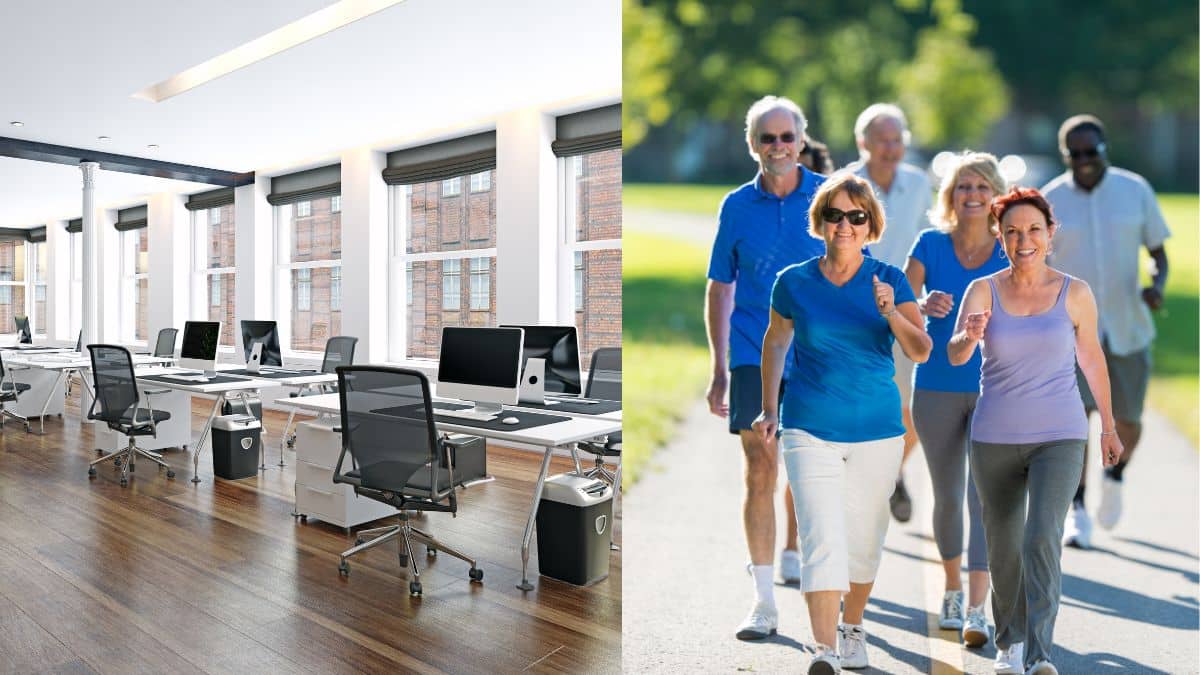
The average office worker spends 10+ hours sitting each day. Meanwhile, movement—especially low-intensity movement like walking—has been proven to boost cognition, creativity, and long-term health.
Enter the solution: walking meeting culture.
It’s a productivity and wellness strategy that’s free, scalable, and surprisingly powerful.
🚶♀️ What Is a Walking Meeting Culture?
A walking meeting culture encourages employees to discuss business while walking, instead of sitting around a table or behind a screen. This shift supports:
- Mental clarity
- Physical health
- Team collaboration
- Higher daily step counts
Walking meetings can be 1-on-1s, team check-ins, or even creative brainstorming sessions. They don’t replace every meeting—just the ones that don’t require a whiteboard or screen share.
🧠 How Does It Improve Productivity?
NEAT (Non-Exercise Activity Thermogenesis) is the movement you do outside of workouts—like walking, standing, or fidgeting. NEAT significantly contributes to daily calorie burn and mental performance.
Walking meetings stimulate:
- Dopamine and serotonin, boosting mood
- Bilateral brain activity, helping you think creatively
- Oxygen flow, increasing focus and alertness
A Stanford study found that walking boosts creative output by 60% compared to sitting.
📉 Does Sitting Really Hurt Your Performance?
Yes. Here’s what the research says:
- Sitting more than 6 hours/day increases the risk of cardiovascular disease by 18%.
- Prolonged sitting is linked to insulin resistance, which can lead to type 2 diabetes.
- Mental burnout rises when movement drops, especially in high-focus roles.
Implementing a walking meeting culture is one of the easiest fixes to improve physical health and employee engagement without needing to change workflows or spend money.
🏢 How Can Companies Implement a Walking Meeting Culture?
It starts with leadership. Managers and department heads should:
- Normalize it – Add “walking meeting” to the calendar invite.
- Set boundaries – Use 30-minute slots. Limit to small groups (2–3 people).
- Be flexible – Offer it as an option, not a requirement.
- Provide walking routes – Indoors or outdoors.
- Lead by example – Conduct their own meetings while walking.
📱 Many meetings don’t require note-taking. For those that do, voice memo apps or wearable tech can help capture thoughts on the go.
🕒 What Meetings Work Best for Walking?
Walking meetings don’t suit every context, but they’re perfect for:
- Weekly check-ins
- Brainstorming sessions
- 1-on-1 performance chats
- Planning and idea generation
- Low-stakes status updates
Avoid for:
- Meetings requiring screen sharing or document review
- Disciplinary or sensitive HR conversations
- Group calls with poor mobile connectivity
🔁 What Are the Long-Term Benefits?
For Employees:
- Burn 150–200 extra calories/day with 2–3 walking meetings
- Lower stress and tension
- Improved cardiovascular health
- Enhanced creative thinking
- Better work satisfaction
For Companies:
- Lower healthcare costs
- Improved retention and engagement
- Culture of wellness and innovation
- Stronger collaboration across departments
📐 Let’s Do the Math
Let’s say a walking meeting burns 80 extra calories over 30 minutes.
If an employee does:
- 3 walking meetings/week × 50 weeks/year = 150 sessions
- 150 × 80 calories = 12,000 extra calories burned/year
- That’s the equivalent of ~3.5 lbs of fat burned passively—without any workout time!
Now imagine your entire team doing this.
🧰 Tools for Supporting a Walking Meeting Culture
🚶 Post-Meal Walking Toolkit
Make your walks more effective and enjoyable with these essentials:
- ⌚ Amazfit Band 7 – Track Your Post-Meal Steps
- 🥤 Hydro Flask Water Bottle – Stay Hydrated While Walking
- 👟 Skechers Go Walk Sneakers – Designed for Comfort After Meals
“A simple walk after each meal can change your metabolism forever.”
📝 Final Thoughts: Create a Culture That Moves
A walking meeting culture helps blend fitness, wellness, and performance without disrupting your schedule. It reflects the math behind NEAT activity and workplace movement—and it turns passive hours into productive ones.
Ready to transform your workplace?
Start with one walking meeting this week. Then watch your culture—and team—elevate.
🔗 Internal Links
- Boosting Employee Productivity With Corporate Fitness
- The Benefits of Starting a Walking Group for Corporate Fitness
🌿 Natural Daily Support for Men and Women
I like Divine Bounty supplements because they use natural ingredients instead of synthetic formulas. For people who want a cleaner option for everyday wellness support, Divine Bounty offers quality supplements designed to fit a healthy lifestyle.
Their lineup includes the popular Men’s Multivitamin, plus other supplements for men and women such as Vitamin B Complex, Digestive Enzymes, Berberine, Magnesium Citrate, Vitamin K2 + D3, and Acetyl L-Carnitine.
The Men’s Multivitamin features 24 essential vitamins and minerals plus 5 additional blends for men, all in convenient vegetarian capsules. It is also promoted as GMO free, soy free, dairy free, wheat free, and gluten free.
🛒 Shop Divine Bounty on AmazonSponsored by Terry Clark • Amazon Affiliate Partner