
Estimated reading time: 6 minutes
What does the range of glucose levels mean for your health, fitness, fat loss, and muscle growth? Blood glucose is not just a number your doctor checks once a year. It is a dynamic, living metric that shifts throughout the day based on what you eat, how you move, how you sleep, and how stressed you are.
For athletes, fitness enthusiasts, and anyone focused on fat loss or muscle gain, understanding glucose patterns can be a strategic advantage.
This article breaks down:
- Normal glucose ranges
- What daily fluctuations mean
- How glucose affects fat loss
- How it impacts muscle growth
- When spikes are healthy vs harmful
- How to optimize levels for performance
What Is Blood Glucose?
Blood glucose is the amount of sugar circulating in your bloodstream. It comes primarily from carbohydrates and is regulated by insulin and glucagon.
Glucose is:
- Your body’s preferred quick fuel source
- The primary energy for your brain
- Critical for high-intensity training
- A regulator of hormone balance
But too much for too long? That’s where problems begin.
Normal Glucose Ranges Throughout the Day
Here’s what healthy, non-diabetic ranges typically look like:
Fasting (Morning Before Eating)
- 70–99 mg/dL = optimal
- 100–125 mg/dL = impaired fasting glucose
- 126+ mg/dL = diabetic range
1–2 Hours After Eating
- Under 140 mg/dL = normal response
- 140–199 mg/dL = impaired tolerance
- 200+ mg/dL = diabetic range
During Exercise
- May rise temporarily due to adrenaline
- Often stabilizes or drops with prolonged activity
Before Bed
- Ideally 80–110 mg/dL
The key is not avoiding spikes entirely — it’s how quickly you return to baseline.
What Glucose Fluctuations Mean for Your Health
1. Stable Glucose = Metabolic Efficiency
If your levels:
- Rise moderately after meals
- Return to baseline within 2 hours
- Stay steady overnight
You likely have good insulin sensitivity.
This is strongly linked to:
- Lower inflammation
- Better cardiovascular health
- Reduced risk of type 2 diabetes
- Better hormone balance
2. Frequent High Spikes = Insulin Resistance Risk
If glucose:
- Frequently exceeds 160–180 mg/dL
- Stays elevated for hours
- Is high even in the morning
That may signal declining insulin sensitivity.
Over time, chronic high glucose contributes to:
- Fat gain (especially visceral fat)
- Increased cortisol
- Energy crashes
- Brain fog
- Metabolic dysfunction
Glucose and Weight Loss
Many people believe lower glucose automatically equals better fat loss. That’s not entirely true.
How Glucose Affects Fat Burning
When glucose is elevated:
- Insulin rises
- Fat burning temporarily pauses
- The body prioritizes using glucose
But that does NOT mean carbohydrates stop fat loss.
What matters is:
- Total calorie balance
- Insulin sensitivity
- Frequency and magnitude of spikes
Ideal Fat-Loss Pattern
For sustainable fat loss:
- Moderate post-meal rise (110–140 mg/dL)
- Return to baseline within 90–120 minutes
- Low fasting glucose
- No large crashes below 70 mg/dL
Extreme swings often increase hunger.
If glucose crashes:
- You crave sugar
- Cortisol rises
- Overeating becomes more likely
Stable glucose supports appetite control.
Glucose and Muscle Growth
This is where many people misunderstand the science.
Carbohydrates are not the enemy of muscle growth. They are a performance tool.
Why Glucose Matters for Muscle
Glucose:
- Refills muscle glycogen
- Fuels high-intensity lifting
- Enhances recovery
- Reduces muscle breakdown
After strength training:
- Insulin sensitivity is higher
- Muscles absorb glucose efficiently
- Nutrient partitioning improves
This is why post-workout carbs are often beneficial.
The Muscle-Building Sweet Spot
For lifters:
- Pre-workout glucose 80–110 mg/dL
- Post-workout rise 120–150 mg/dL
- Quick return to baseline
Chronic low glucose (from aggressive dieting) may:
- Reduce training intensity
- Increase cortisol
- Slow recovery
- Suppress testosterone
That’s not optimal for muscle growth.
The Role of Continuous Glucose Monitoring
Devices like the Dexcom G7 and Freestyle Libre 3 have made real-time glucose tracking more accessible.
They allow you to see:
- How specific foods affect you
- Stress responses
- Sleep impact
- Training responses
- Meal timing effects
But remember:
- Not every spike is harmful
- Context matters
- Performance athletes may have different patterns
A controlled spike after training is not the same as a random spike from ultra-processed foods.
What Causes Glucose Spikes?
1. Refined Carbohydrates
White bread, soda, pastries.
2. Poor Sleep
Sleep deprivation increases insulin resistance.
3. High Stress
Cortisol raises glucose — even without food.
4. Sedentary Behavior
Muscles act as glucose sinks. Movement lowers levels.
5. Low Muscle Mass
More muscle = better glucose disposal.
This is one reason resistance training is so powerful for metabolic health.
The Fasting Glucose Trap
Some fitness enthusiasts obsess over keeping glucose as low as possible.
But very low fasting glucose (under 70 mg/dL) can indicate:
- Undereating
- Overtraining
- Excessive caloric restriction
- Adrenal stress
Chronically suppressed glucose may slow metabolism — not enhance it.
Your body is not meant to live in constant deprivation.
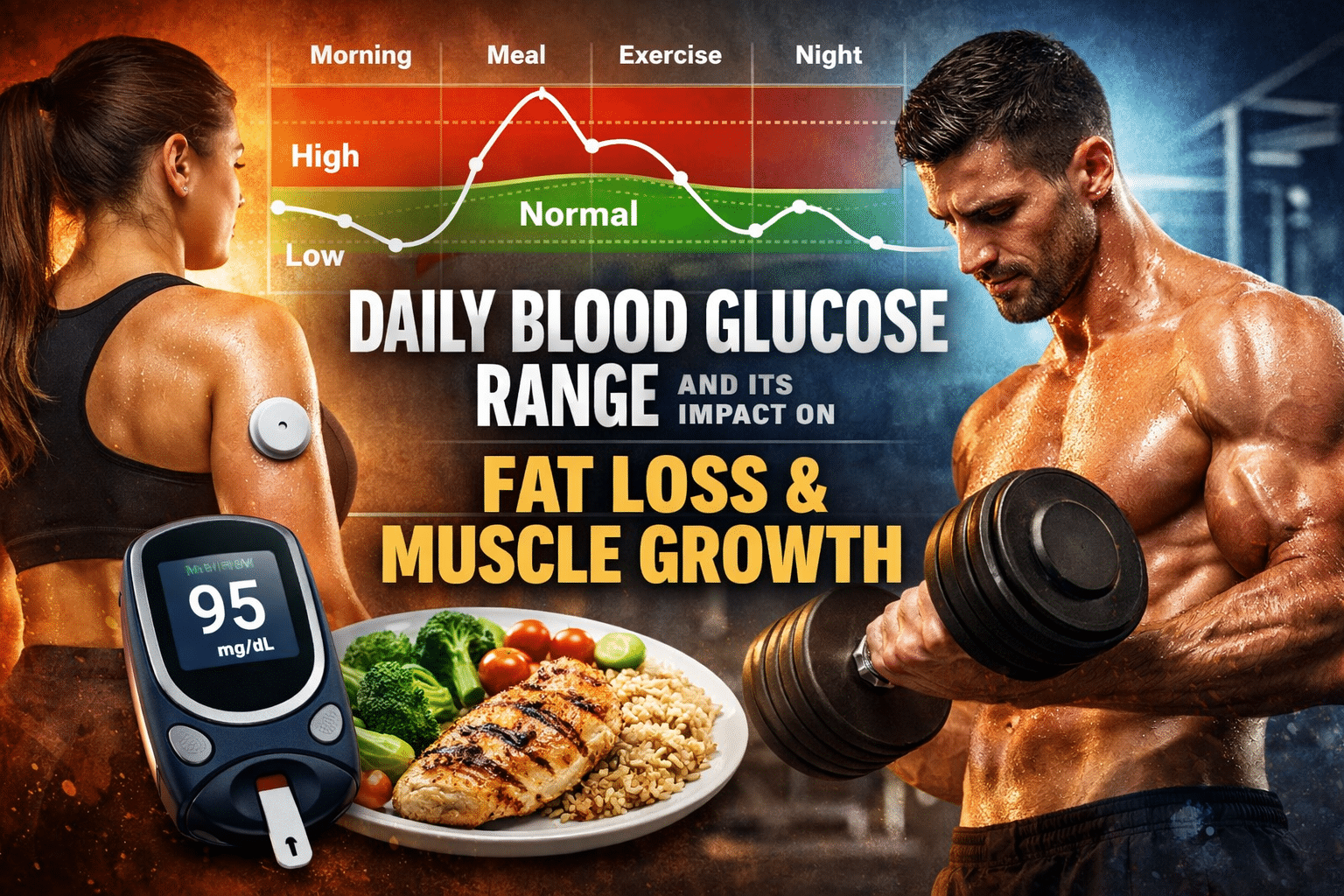
Daily Glucose Rhythm Example (Healthy Individual)
Morning: 85 mg/dL
Breakfast spike: 125 mg/dL
Mid-morning: 90 mg/dL
Lunch spike: 135 mg/dL
Afternoon workout: 110 mg/dL
Post-workout meal: 140 mg/dL
Evening: 95 mg/dL
Before bed: 90 mg/dL
This pattern reflects:
- Good insulin sensitivity
- Efficient recovery
- Strong metabolic flexibility
Red Flags to Watch For
- Fasting consistently above 100 mg/dL
- Spikes above 180 mg/dL
- Staying elevated 3+ hours
- Severe crashes below 70 mg/dL
- Nighttime spikes without eating
If these occur frequently, medical evaluation is wise.
How to Optimize Glucose for Health and Fitness
1. Lift Weights
Resistance training improves insulin sensitivity more than almost any supplement.
2. Walk After Meals
10–15 minutes lowers post-meal glucose significantly.
3. Eat Protein First
Protein and fiber slow glucose absorption.
4. Prioritize Sleep
Poor sleep can raise fasting glucose 10–20 points.
5. Time Carbs Around Training
Use glucose when your body can use it.
6. Build Muscle
More lean mass = better glucose disposal.
Metabolic Flexibility: The Real Goal
The ultimate aim is not “low glucose.”
It’s metabolic flexibility — the ability to:
- Use carbs efficiently
- Switch to fat when needed
- Avoid extreme swings
- Recover quickly
Athletes with strong metabolic flexibility:
- Handle carbohydrates well
- Maintain stable energy
- Burn fat effectively
- Gain muscle efficiently
Final Takeaway
Blood glucose is not something to fear. It’s something to understand.
Healthy patterns support:
- Longevity
- Fat loss
- Muscle growth
- Energy stability
- Hormonal balance
Unstable patterns can:
- Increase fat storage
- Raise inflammation
- Disrupt recovery
- Impair performance
If you’re serious about optimizing your physique and long-term health, learning how your body handles glucose is a powerful next step.
The goal is not zero spikes.
The goal is efficient recovery, stable energy, and metabolic resilience.
And that is where real transformation happens.
Read Next…
- Metabolic Syndrome: What It Is, Risks, and How to Reverse It Naturally
- Glucose Monitors for Weight Loss: Do They Actually Help You Burn Fat?
- Unlocking Balance: The Optimal Diet for Managing Insulin Resistance
- Energy Level – How to Eat the Right Foods to Become More Active
- Walking After Meals for Weight Loss
🌿 Natural Daily Support for Men and Women
I like Divine Bounty supplements because they use natural ingredients instead of synthetic formulas. For people who want a cleaner option for everyday wellness support, Divine Bounty offers quality supplements designed to fit a healthy lifestyle.
Their lineup includes the popular Men’s Multivitamin, plus other supplements for men and women such as Vitamin B Complex, Digestive Enzymes, Berberine, Magnesium Citrate, Vitamin K2 + D3, and Acetyl L-Carnitine.
The Men’s Multivitamin features 24 essential vitamins and minerals plus 5 additional blends for men, all in convenient vegetarian capsules. It is also promoted as GMO free, soy free, dairy free, wheat free, and gluten free.
🛒 Shop Divine Bounty on AmazonSponsored by Terry Clark • Amazon Affiliate Partner